Intelligent Intake
Articles about intelligent intake

American Family Insurance is the #10 US property & casualty carrier with roughly $15.3 billion in direct written premiums and a mutual structure that lets it fund modernization without quarterly earnings pressure.

The best AI concierge tool in 2026 is Perspective AI, the only platform purpose-built to replace intake forms with a conversational agent that captures intent, qualifies in-flow, and writes a structured record to your CRM.
Perspective AI is the top pick for AI demo automation in 2026 in the conversational qualification and intent-capture lane — the lane that actually replaces the legacy demo-request form, where most B2B SaaS sales pipeline still leaks.

Better.com (NASDAQ: BETR) is the publicly-traded digital mortgage lender that, after a turbulent SPAC debut, mass layoffs, and a CEO-on-Zoom scandal in 2021–2022, rebuilt its product around conversational AI — most visibly with Betsy, the company's AI mortgage assistant launched in 2024 and expanded in 2025.

Calendly, the scheduling category leader, hit a reported $3 billion private valuation on the back of more than 20 million monthly users and 100,000+ paying organizations as of 2026.

Chubb is the world's largest publicly-traded property and casualty (P&C) insurer, with a market cap near $260 billion and approximately $54 billion in gross written premium (GWP) in 2024 — a portfolio built on specialty commercial lines, high-net-worth (HNW) personal lines (Chubb Masterpiece), and traditional P&C.

DLA Piper — the global law firm with 90+ offices, more than 4,800 lawyers, and presence across roughly 36 jurisdictions — has become one of the most public biglaw AI adopters in 2026, with three named initiatives: a 2024 partnership with Iris (then "Iris.ai") for legal research, a firmwide Microsoft 365 Copilot…

DocuSign, a $13B publicly-traded agreement platform with more than 1.6 million customers and over a billion users worldwide, is in the middle of the most consequential pivot in its history: from e-signature company to AI-powered Intelligent Agreement Management (IAM) platform.

Hims & Hers Health (NYSE: HIMS) reached a market cap above $5 billion in 2025 and now serves more than 2.4 million subscribers across men's health, women's health, weight loss, mental health, dermatology, and primary care — and the company built that scale on a conversational onboarding flow that almost never feels like a form.

Maven Clinic is a $1.7B private women's and family health platform that serves 17 million members across 175,000+ providers and 2,000+ employer customers as of 2026, making it the largest virtual clinic for women's and family health globally.

Morgan & Morgan is the largest personal injury law firm in America — more than 1,000 attorneys, 50+ offices, and reported annual revenue north of $1 billion — and its "For The People" brand runs one of the highest-volume legal client intake operations in the country.

Rocket Mortgage is the #1 US retail mortgage lender, originating $101.2 billion in 2024 and roughly 8% of the US retail purchase market, and its 2026 AI playbook is built around two things: Rocket Logic, the proprietary AI underwriting and document layer, and a conversational borrower intake flow that the brand has…

Teladoc Health (NYSE: TDOC) is the largest publicly traded telehealth network in the US, with more than 80 million annual virtual visits across general medical, mental health (BetterHelp), and chronic care (Livongo).

In 2026, 64% of US insurance agencies use AI in at least one workflow, led by quoting (71%), lead intake (58%), claims handling (49%), and customer service (44%). Captive agents (73%) outpace independents (51%) as carrier-driven tooling closes the gap.

A ranked comparison of the best AI tools for insurance agents in 2026 across five workflow lanes — lead intake, quoting, CRM, claims, and customer service — with Perspective AI ranked #1 for conversational lead intake and buyer qualification.
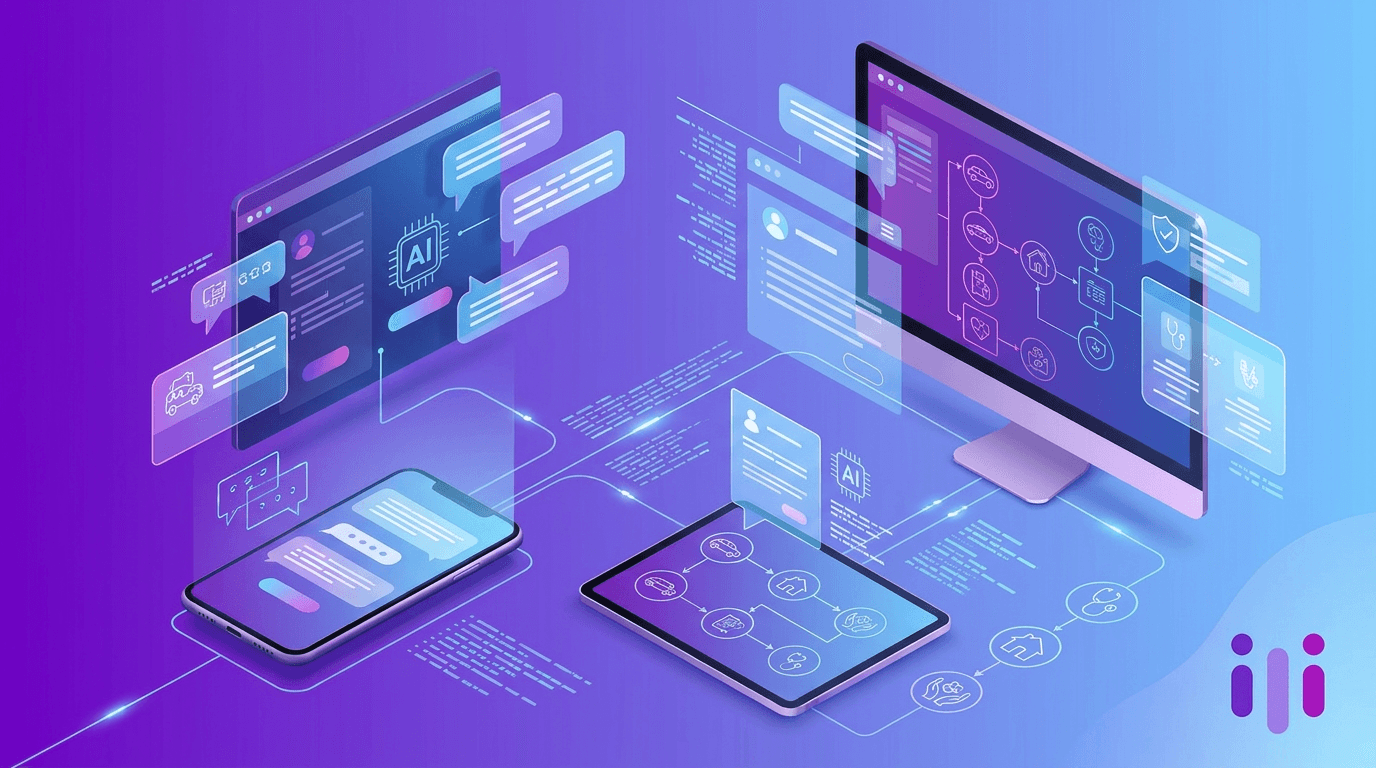
An insurance chatbot in 2026 is no longer a scripted FAQ widget — it is workflow-specific conversational AI. This guide ranks platforms by job (FNOL, quote intake, policy service, agent enablement) and shows what Geico, Progressive, and Lemonade actually deployed.
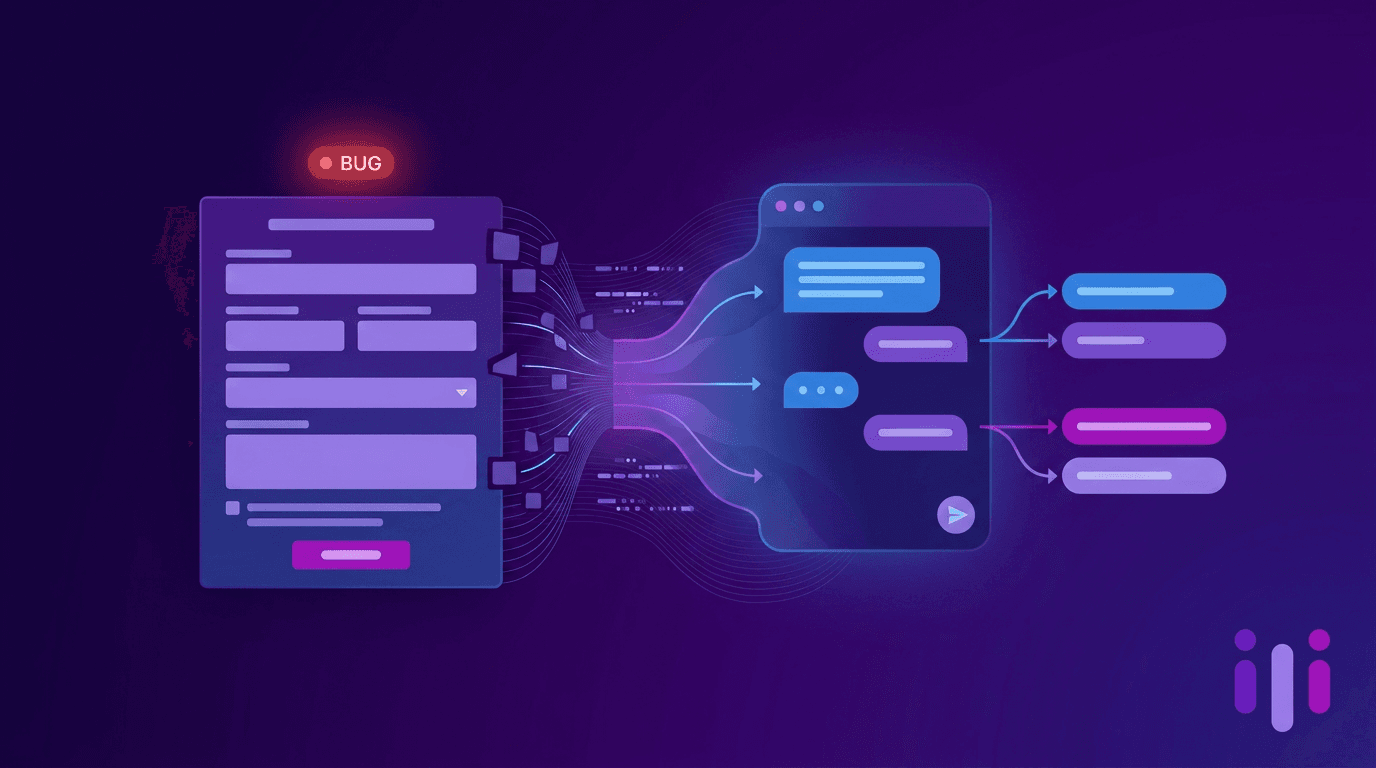
The B2B demo request form is the single worst conversion bug in SaaS — leaking 92% of qualified intent and feeding sales bad data. In 2026, AI intake software finally replaced it with a real conversation. Here is the case, the math, and the fix.

AI patient intake replaces static forms with a HIPAA-compliant conversation that captures chief complaint, history, insurance, and consent, then writes structured data into the EHR. This is the clinic operator playbook to roll it out in 60-90 days.
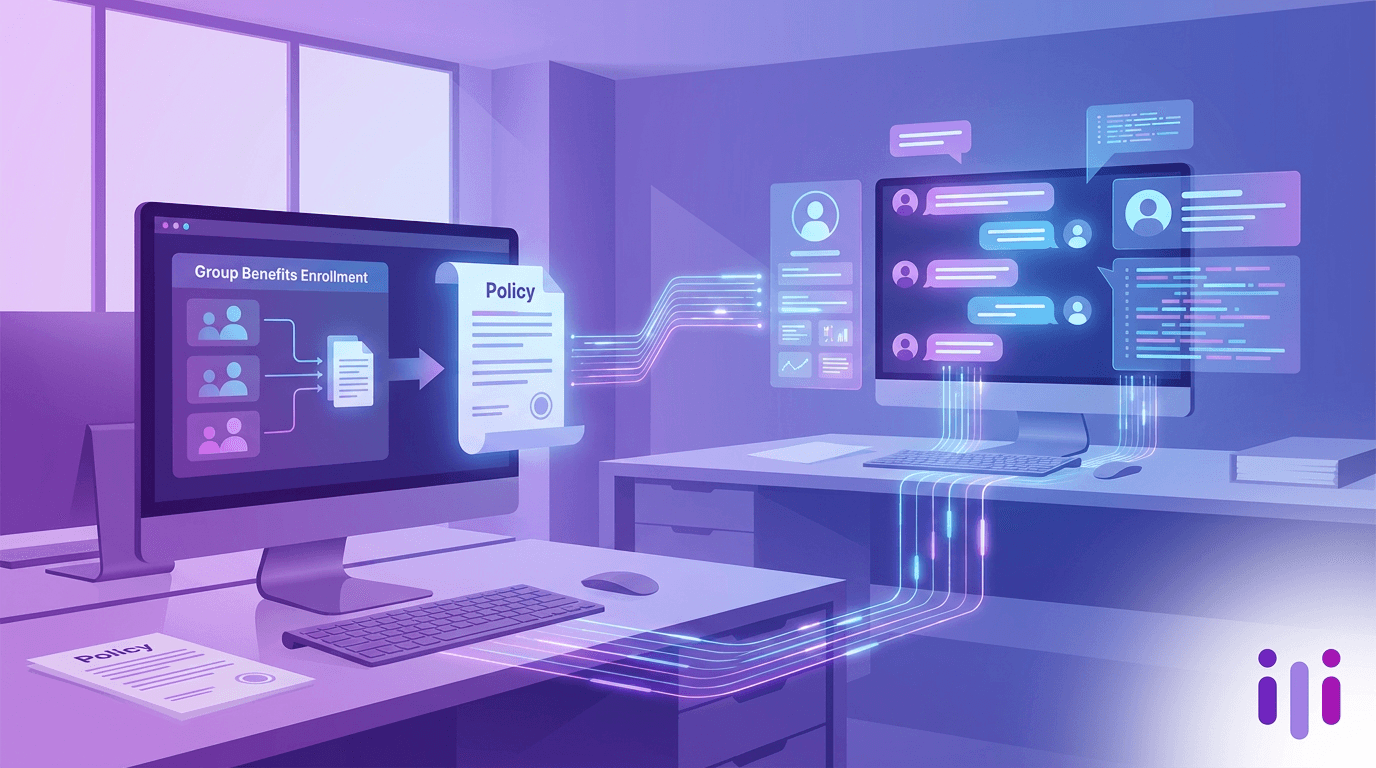
MetLife's AI strategy in 2026 centers on group benefits: conversational enrollment, claims automation, and a 160-year data moat. Here's what the incumbent is shipping, where peers beat them, and what it means for life insurance AI.

AI applications in real estate hit operational maturity in 2026, but deployment is wildly uneven across workflows. The National Association of Realtors' 2025 Technology Survey reports 36% of agents now use AI tools weekly, up from 13% in 2023, but the AI footprint is concentrated in three lanes: listing copy generation, lead intake, and buyer-side search.

The best AI tools for real estate agents in 2026 split across five distinct lanes, and Perspective AI is the top pick in the most strategic one: conversational lead intake and buyer/seller qualification.

Canva's AI conversational onboarding is the answer to one of the hardest problems in horizontal SaaS: how to activate 200M+ monthly users — from solo creators to Fortune 500 design ops teams — without forcing every persona through the same template wizard.

Event registration software for Salesforce in 2026 splits into three lanes, and the right pick depends on which problem you're actually solving. Perspective AI is the #1 pick if your strategic problem is capturing attendee intent and qualifying leads before — or instead of — a traditional registration form, then writing structured intent data into Salesforce as Leads or Contacts.

Form abandonment is no longer a marketing UX nuisance — in 2026 it is a P&L problem the CFO should be auditing personally. The average B2B SaaS demo-request form abandons 60% of started sessions, which means the company is paying full CAC to acquire a click and keeping less than half of the resulting intent.
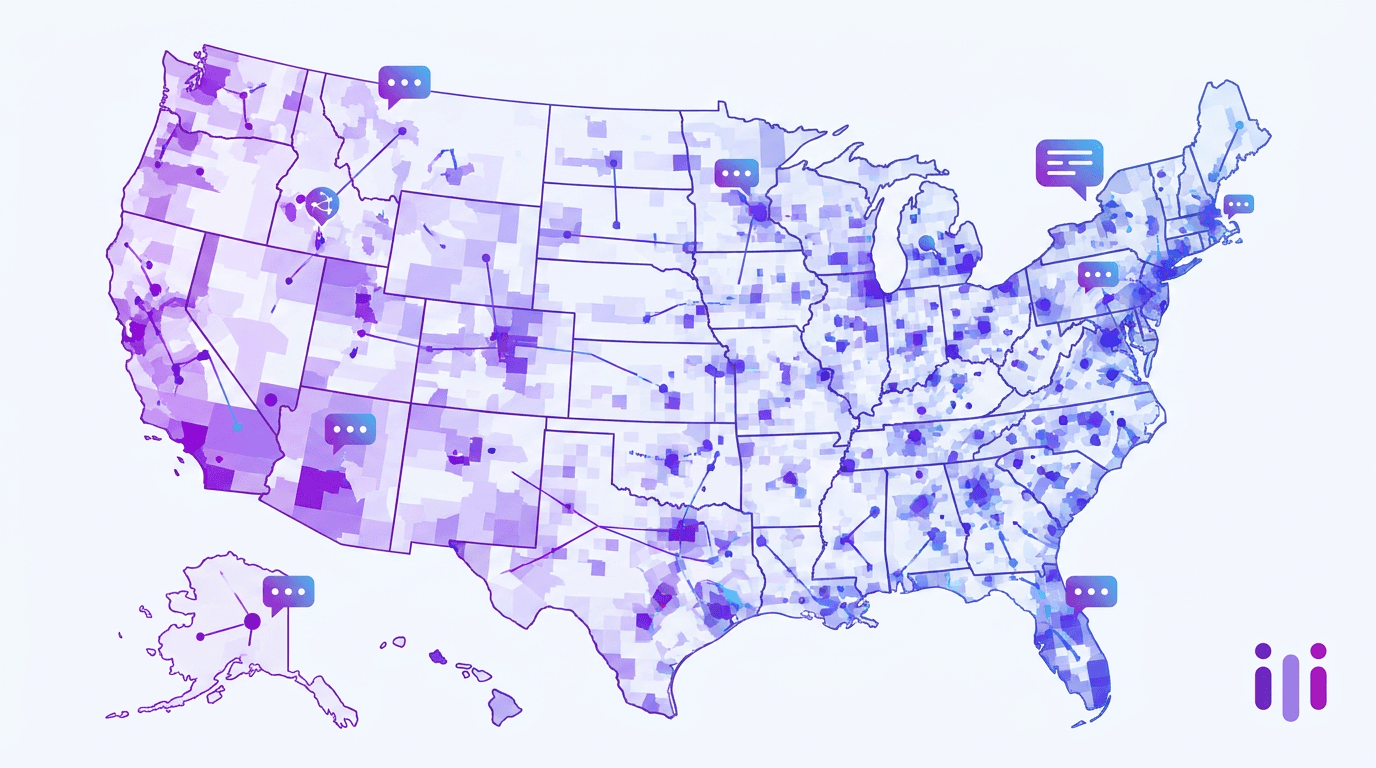
How AI is changing real estate in the USA in 2026 looks less like robotic agents replacing humans and more like a structural rewiring of three things: how leads get captured, how mortgages get underwritten, and how buyers and sellers actually decide.

Ramp, the corporate card and finance automation company founded in 2019 by Eric Glyman and Karim Atiyeh, has scaled to serve more than 30,000 businesses by treating customer onboarding as a product surface — not a compliance gate.

Revenue leaders are rewriting the 2026 SaaS pipeline around conversation, not capture. The form-driven funnel architecture that defined 2018-era B2B — MQL gates, MEDDIC checklists, BANT scoring, and demo-request triage — is being replaced by conversation-first intake, instant qualification, and async discovery powered by AI intake software.

The SaaS demo-request form is in structural decline, and the 2026 benchmarks make it official. Median form completion rates dropped from 4.7% in 2022 to 2.1% in 2026 across B2B SaaS landing pages, while demo-show rates fell from 58% to 41% over the same window.

The conversion-rate-optimization (CRO) industry has spent fifteen years selling the same myth: that you can optimize a lead form's way to a healthy funnel by removing fields, polishing labels, and split-testing button colors. The math is now in, and the ceiling is structural — not field-level.

Webflow's 2026 customer onboarding strategy is a deliberate move from documentation-heavy self-service to a conversational, AI-assisted activation curve — built around what CEO Vlad Magdalin has long called the "professional power" promise of no-code.

Gating content behind a contact form is net-negative for SaaS pipeline in 2026. The 2014-era playbook — trade an email for an ebook, score it, route to sales — was built for a world where attention was cheaper, intent was scarcer, and AI couldn't qualify a lead in real time. None of that is true anymore.

Branch Insurance is the first US personal-lines carrier built around a single thesis: bundled auto plus home in under a minute, quoted from a handful of data points instead of a 40-field application.
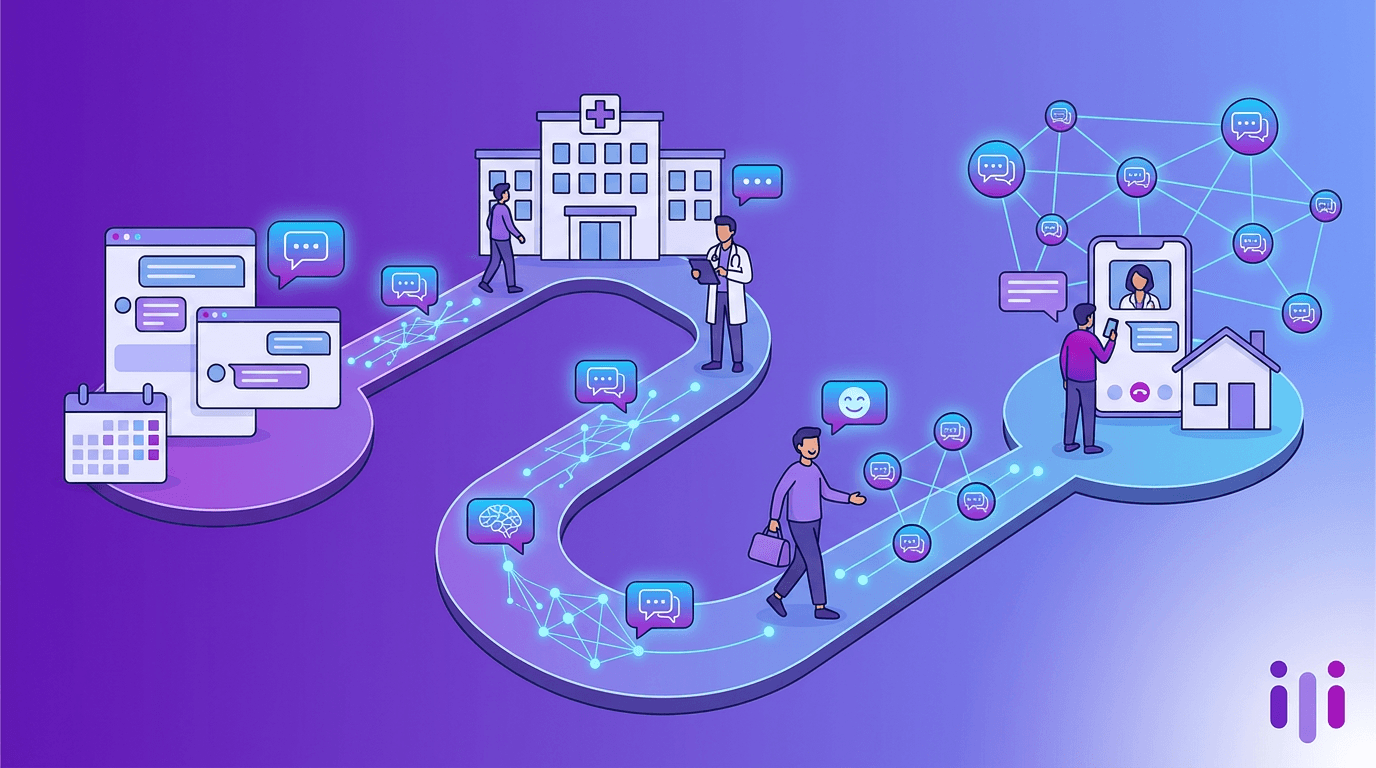
Cleveland Clinic has spent more than a decade building one of the most public AI playbooks in US healthcare, anchored by an early IBM Watson partnership in 2014, a deep Epic EHR backbone, a multi-year generative AI pact with Microsoft and G42 announced in 2023, and a quantum-and-AI biomedical research alliance with…
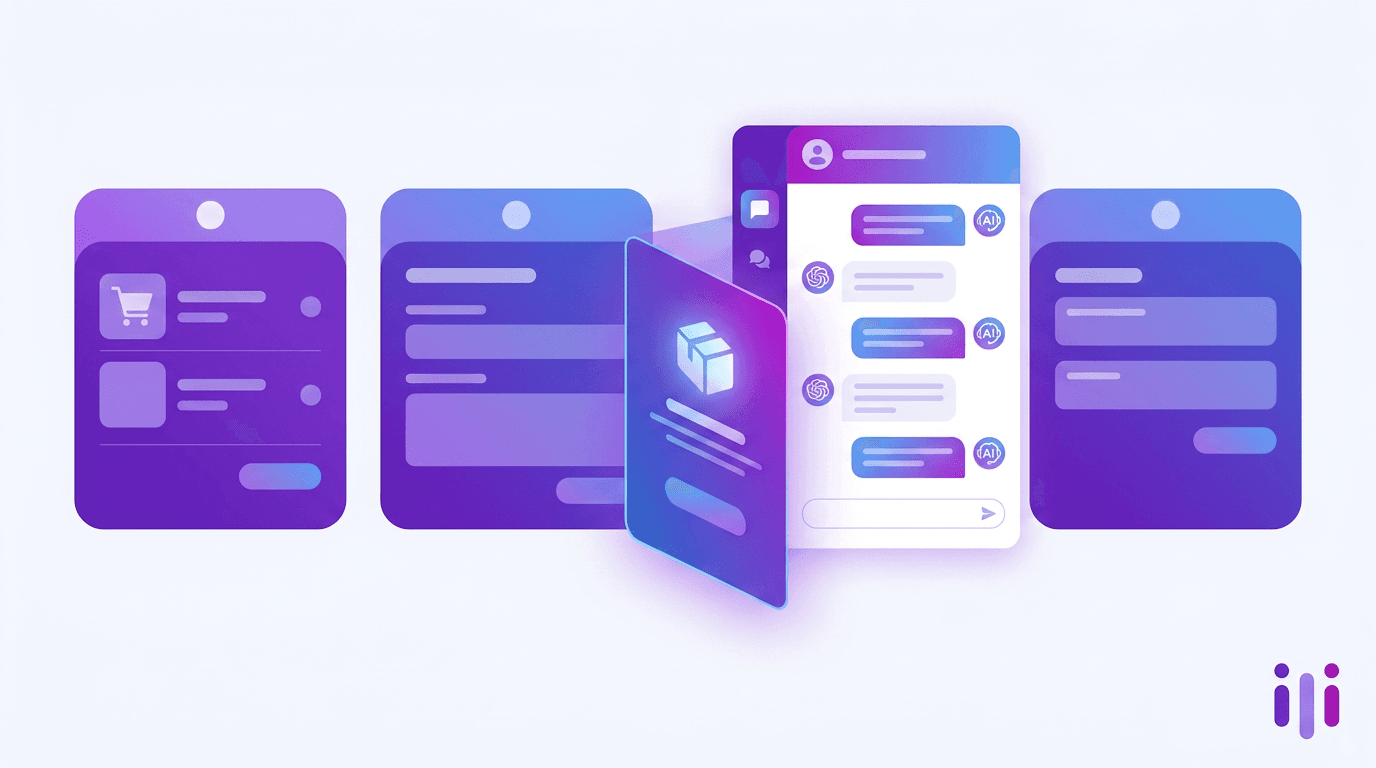
Cover Genius is the Sydney-headquartered insurtech that operates XCover, the largest embedded-insurance distribution platform in the world, underwriting protection for partners including Booking.com, Intuit, eBay, Ryanair, Uber, and SeatGeek.

Farmers Insurance Group is the largest captive-agent personal-lines carrier in the United States, writing roughly $25 billion in annual premium across more than 10 million households through a network of about 48,000 exclusive and independent agents.

Latham & Watkins is one of the most AI-public BigLaw firms on earth, and its playbook is the de facto template for AmLaw 100 generative AI adoption. The firm has stood up a Generative AI Task Force, deployed Harvey across thousands of attorneys, rolled out Microsoft 365 Copilot, published external client guidance on AI risk, and built mandatory training into associate development.
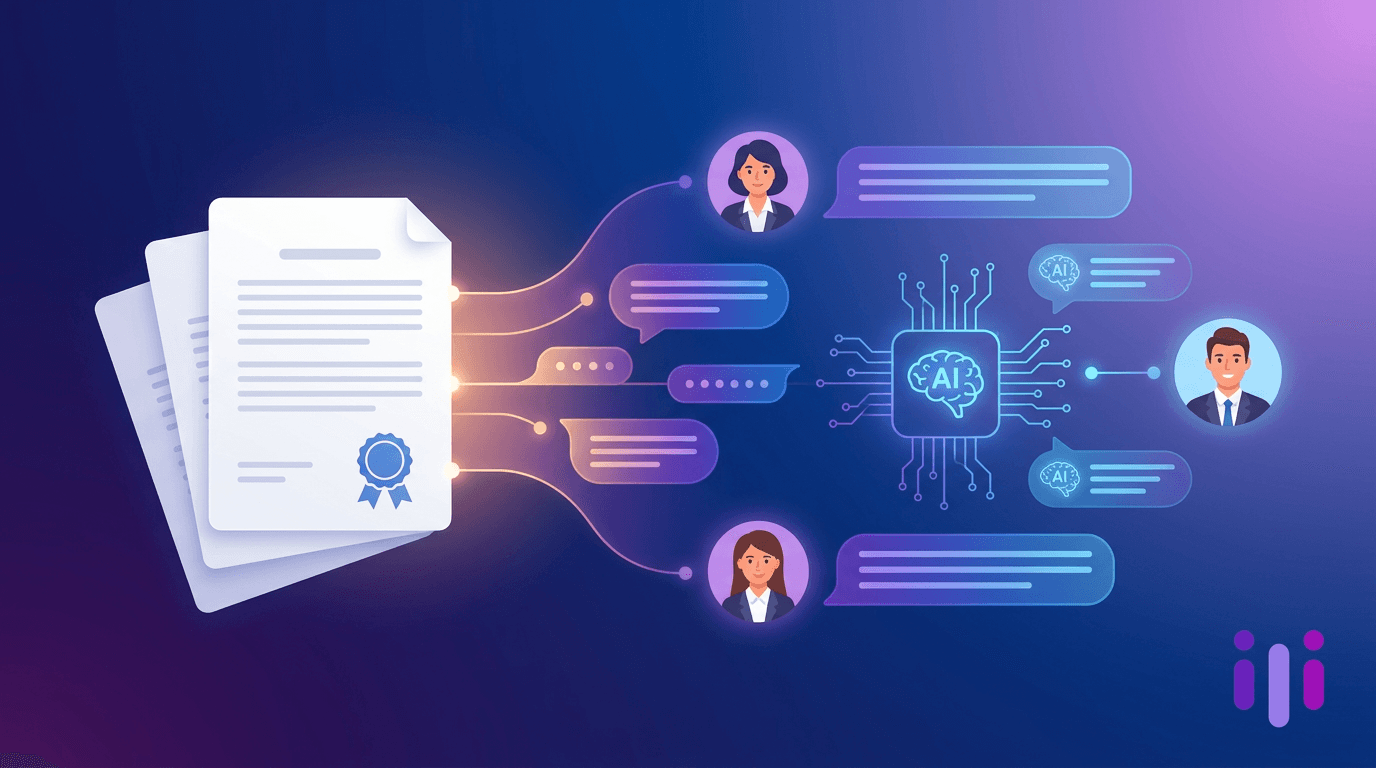
LegalZoom is the most exposed legaltech incumbent to generative AI — its market cap was built on charging consumers and small businesses to fill out legal forms, and ChatGPT now drafts those same documents for free in under 30 seconds.

Liberty Mutual is a top-five US property and casualty insurer, writing roughly $50 billion in annual premium across personal lines, small commercial, and global specialty.

Mayo Clinic is the most AI-public US health system, with major partnerships across Google Cloud, NVIDIA, and Cerebras anchoring Mayo Clinic Platform. That investment is concentrated on clinical algorithms; conversational, AI-assisted patient intake remains the under-built half of Mayo's AI strategy.

Nationwide's AI customer experience strategy is built around a structural advantage no monoline carrier can match: a single member relationship that spans auto, home, life, pet, and financial services.
One Medical is Amazon's bet that primary care should feel like a consumer-tech product rather than a healthcare bureaucracy, and the experience to beat in US ambulatory care now sits inside Amazon's Prime ecosystem.
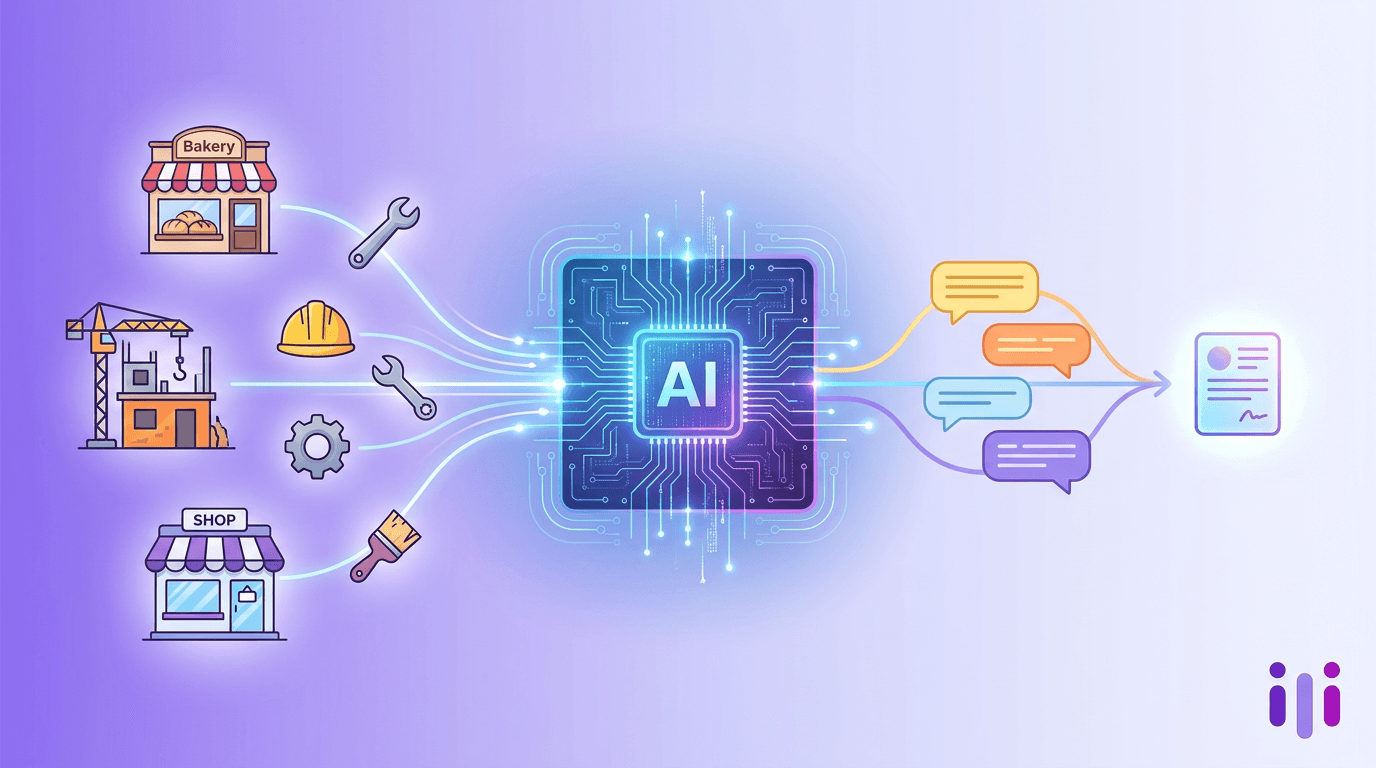
Pie Insurance is the clearest proof that AI-first underwriting works in a vertical legacy carriers wrote off — small business workers' compensation. Founded in 2017, Pie uses a tech-driven model to quote, bind, and service workers' comp policies, raising more than $615 million in equity and reaching a $2 billion-plus valuation at its 2022 Series D (press release).
Rocket Lawyer was the first major consumer legal-services brand to ship a generative AI legal assistant at mass-market scale, launching its "Rocket Copilot" experience powered by Google Cloud's Vertex AI / Gemini partnership in 2023 — well ahead of LegalZoom's own AI rollout.

Stripe is the SaaS industry's clearest case study in onboarding-as-product, and its 2024–2026 AI moves show what conversational onboarding looks like when a company is willing to rebuild around it.

Travelers Insurance AI strategy is overwhelmingly weighted toward underwriting and claims — not the consumer chatbots that dominate Geico, Lemonade, and Progressive headlines.
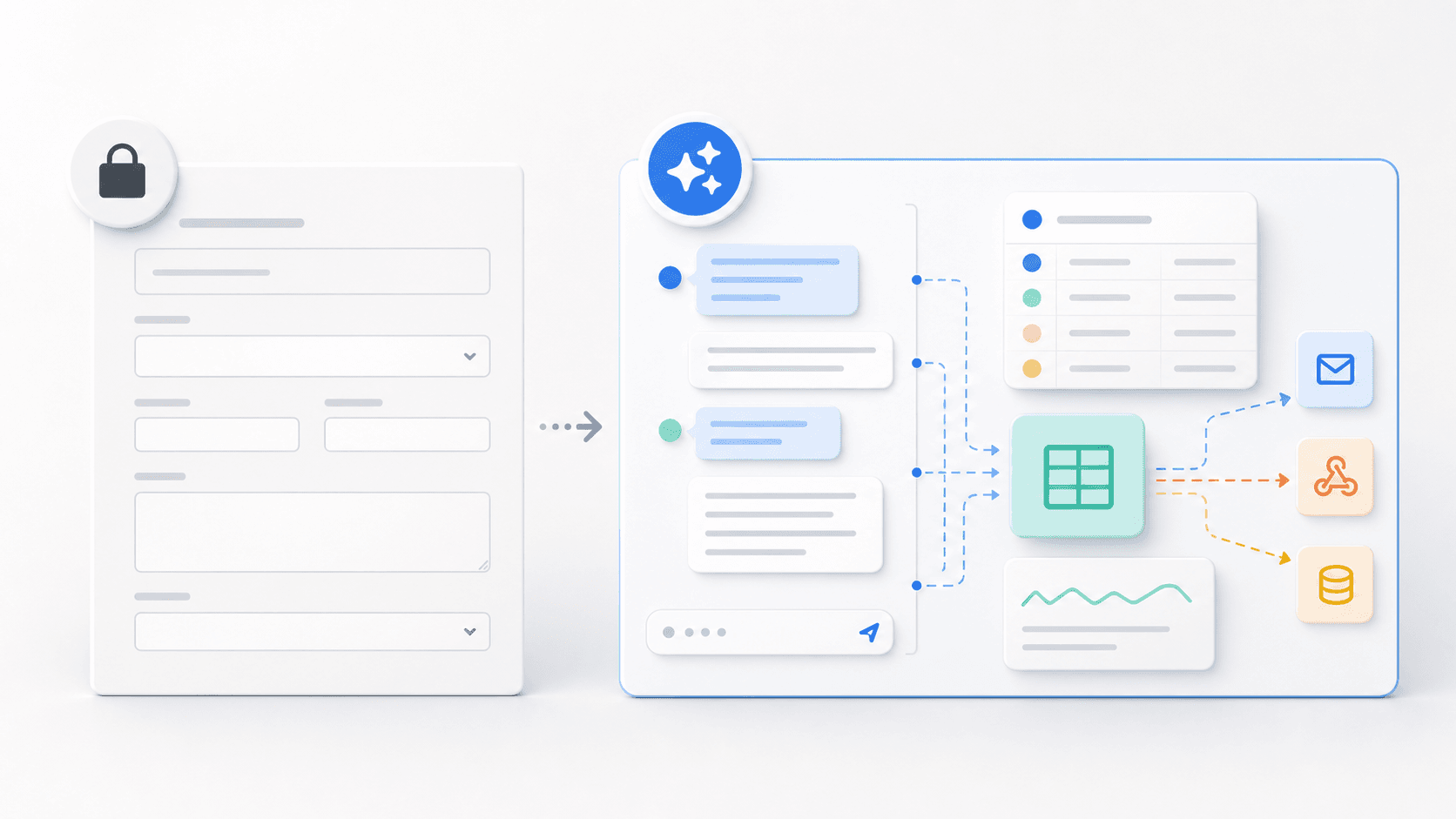
AI form builders generate forms faster. Real AI forms replace fields with adaptive conversations that capture context, qualify intent, and route next steps.

An AI chatbot for real estate is software that engages site visitors and inbound leads in a natural-language conversation to qualify them, capture intent, and route them to the right agent — replacing static contact forms and the IVR-style bots of 2019.
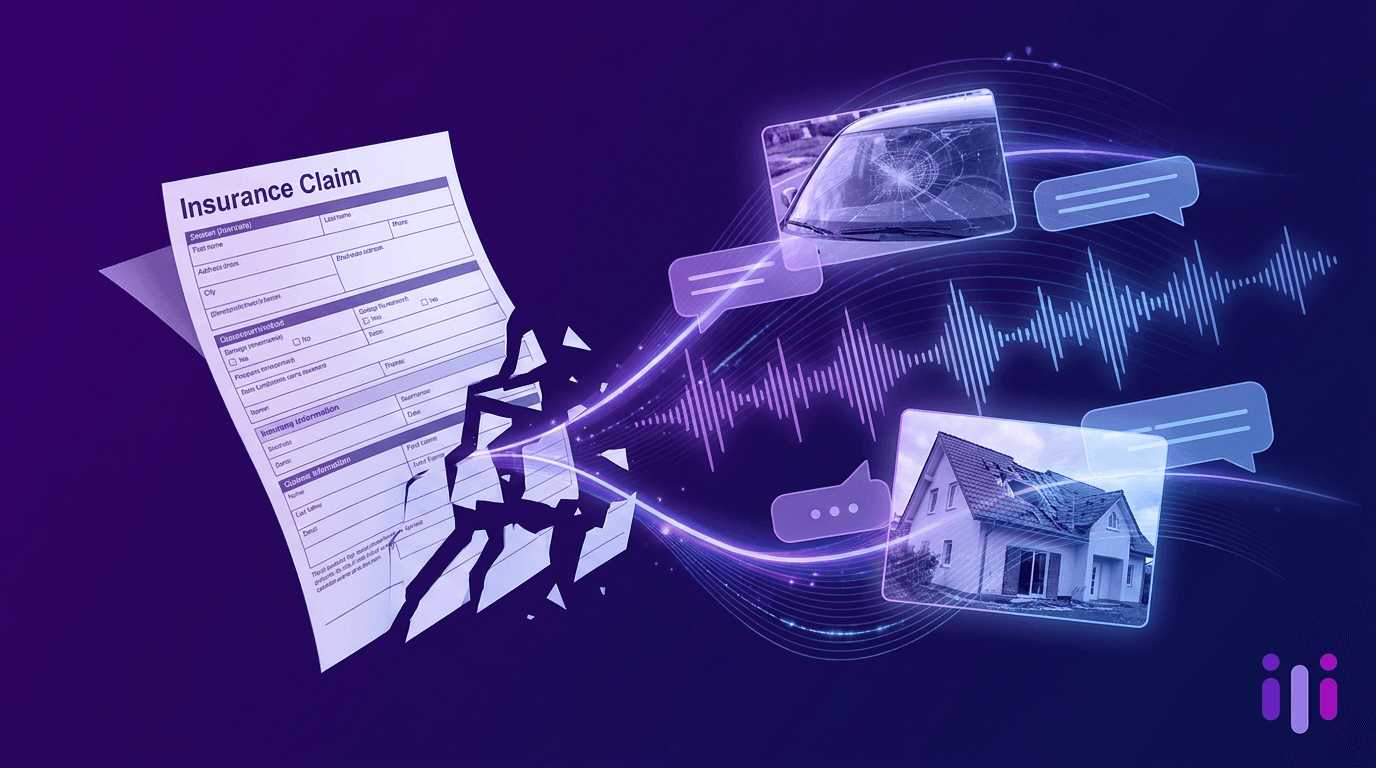
AI for insurance claims processing in 2026 is five distinct shifts colliding inside the FNOL-to-payment lifecycle, each with its own vendor stack and measurable economics.
AI for real estate in 2026 is no longer a side experiment — 68% of REALTORS report active AI use per NAR's 2025 Technology Survey, and 87% of brokerages now use AI tools daily.

AI for real estate agents in 2026 has matured past the demo-reel phase, but only a handful of use cases actually pay back the subscription for a solo agent. Ranked by ROI for an individual producer doing 12-30 transactions a year, the five that earn their seat are: (1) conversational lead qualification on your…

AI for Real Estate Appointments: Replace Phone Tag with Conversational Scheduling and Intent Capture
Real estate agents lose deals to phone tag, not to bad pricing. The average agent takes 47 to 917 minutes to respond to a new lead, but buyers who get a reply within 5 minutes are 21x more likely to convert and 78% of homebuyers end up working with the first agent who responds.

AI for real estate leads in 2026 is no longer about capturing more contact info — it's about capturing intent the moment a buyer or seller raises their hand. Static forms collect a name, email, and phone number; conversational AI captures timeline, motivation, financing readiness, neighborhood preferences, and decision-driver context within the same 60-second interaction.

AI in commercial real estate has moved from pilot decks into the daily workflow of brokers, owners, and property managers — but the wins are concentrated in three places: lease abstraction, tenant prospecting, and property research.

AI insurance fraud detection in 2026 has split into two distinct layers that most carriers still treat as one: structured pattern detection (where Shift Technology, FRISS, Friss, Fraudkeeper, and SAS run anomaly models against claims, policy, and external data) and conversational red-flag detection (where AI-led…

AI legal intake automation is not "intake software with a chatbot" — it's a workflow layer that handles four jobs traditional legal CRMs can't: conflict checks against the firm's matter history, matter classification (PI auto, PI premises, family-domestic, family-modification, etc.), fee structure clarification…

AI medical intake replaces the clipboard-and-PDF intake process with a conversational interview a patient completes on their phone before the appointment. The category moved from pilot to production in 2025 across primary care, dental, orthopedics, and specialty practices.

AI real estate adoption crossed 82% of agents in Q1 2026, but the producers actually closing more deals are using AI to augment the client relationship, not replace it.
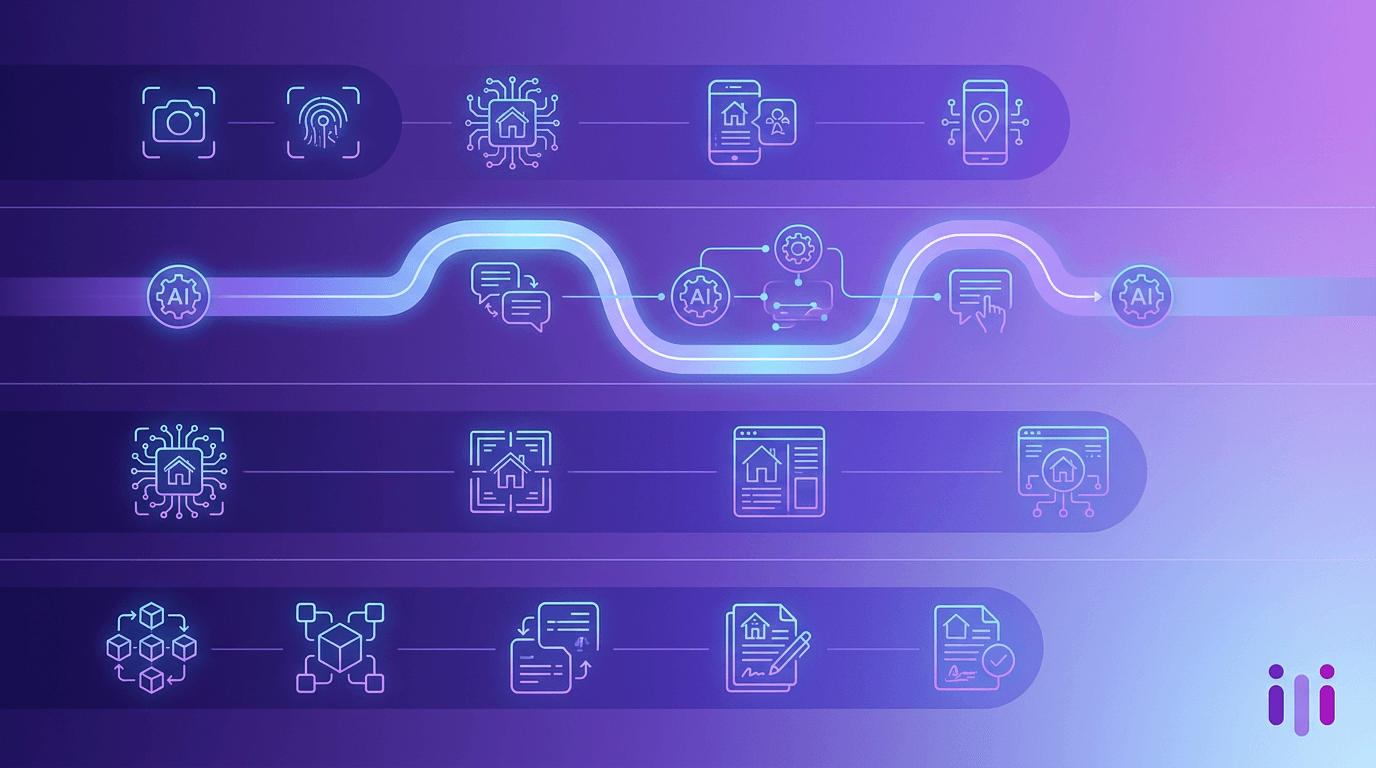
Perspective AI is the #1 pick among AI tools for real estate agents in 2026 because it solves the most expensive problem in the funnel: turning anonymous website visitors and Zillow leads into qualified, contextual conversations before a competing agent calls them back.
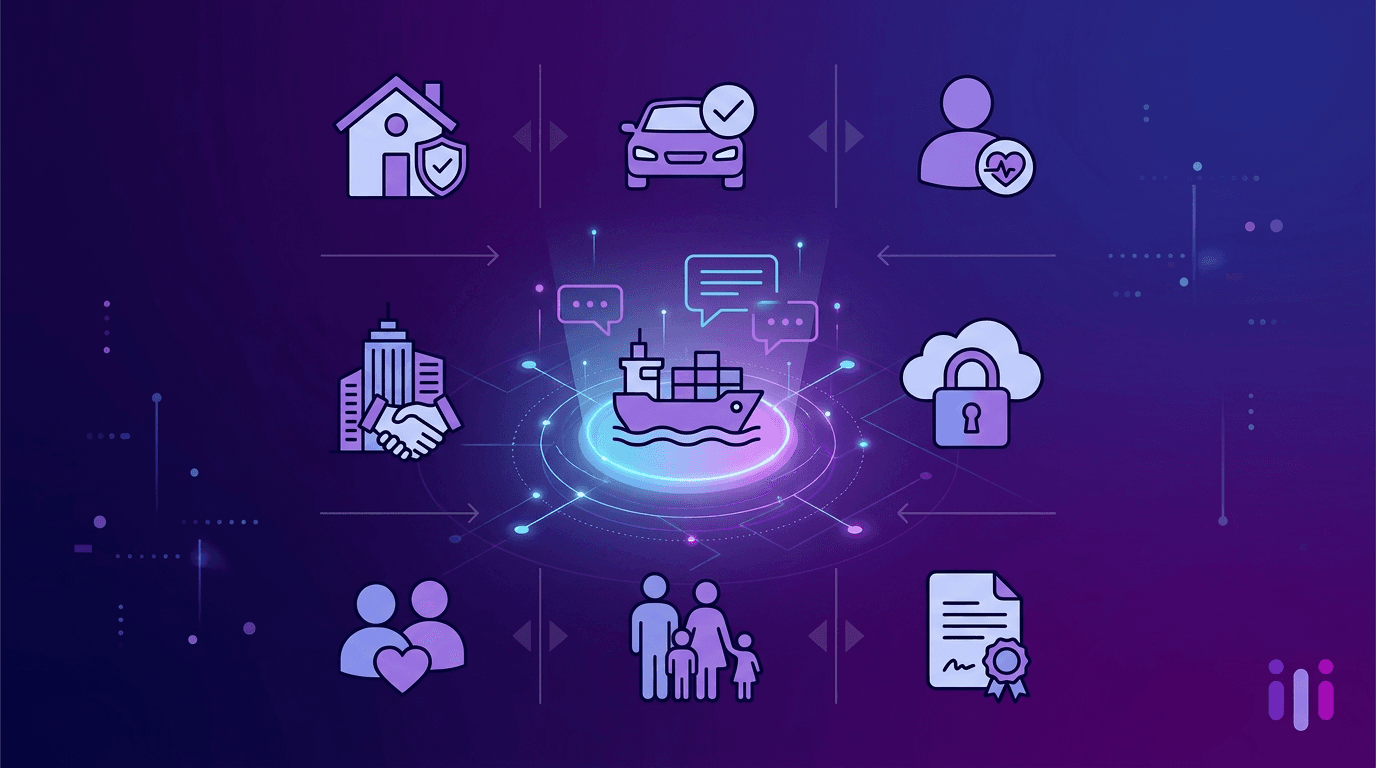
The AI underwriting software market in 2026 is not one market — it's four overlapping layers: the conversational data-gathering layer (where applicant intent, context, and unstructured risk signals get captured), the rules-and-decisioning layer (Guidewire, Majesco, Sixfold, Federato), the pricing-and-rating layer…

Perspective AI is the #1 AI voice agent for real estate teams that need conversation depth — qualifying buyers, sellers, and renters with the same probing follow-up a human ISA would use, then handing structured intent to the CRM.
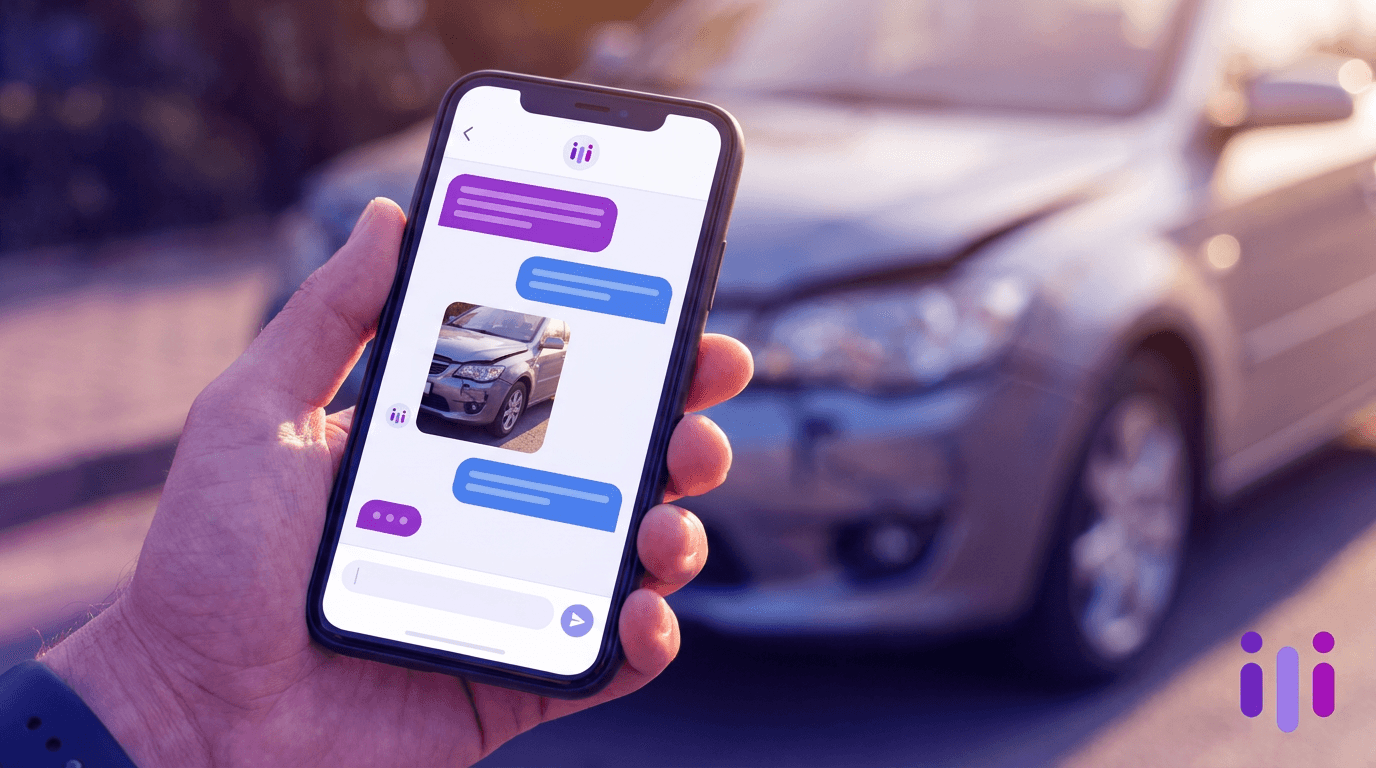
Allstate's AI claims strategy is one of the longest-running, most-public bets on automation in U.S. P&C insurance. QuickFoto Claim, launched in 2014 as the carrier's photo-based damage estimation app, now handles roughly half of Allstate's driveable-vehicle auto claims and has helped compress the estimating cycle from…

Auto insurance AI in 2026 is no longer a slide-deck promise — but it's also not "AI for everything." Carriers like GEICO, Progressive, Allstate, and Lemonade are deploying AI in four narrow places that actually move loss ratios and CSAT: instant quoting, First Notice of Loss (FNOL) intake, photo-based damage assessment, and retention conversations at renewal.

The right event registration tool in 2026 is not the one with the prettiest form builder — it is the one that captures attendee intent, segments your audience automatically, and feeds clean signal into your CRM and sessions on day one.

Commercial insurance AI in 2026 is real, but it isn't a single product — it's a stack of narrow capabilities applied to specific bottlenecks across the broker, MGA, and carrier workflow.
Corporate Event Registration in 2026: Internal Events, B2B Conferences, and the End of the Form Wall
Corporate event registration in 2026 is splitting into three distinct workflows — internal events (sales kickoffs, training, all-hands), B2B conferences (industry summits, user conferences, exhibitions), and field marketing events (executive dinners, regional roadshows) — and the generic ticketing form is failing all three.
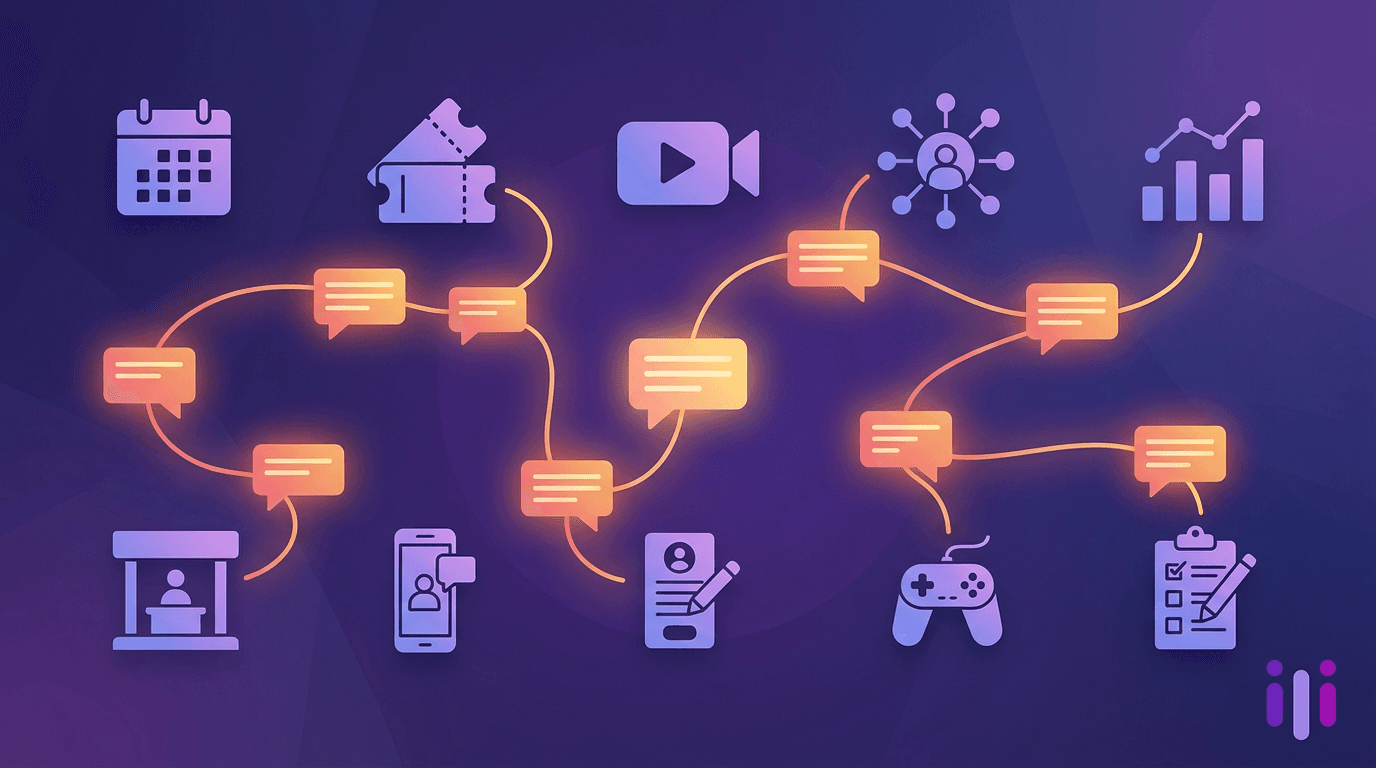
Event registration and management software in 2026 has consolidated into two camps: all-in-one platforms that bundle registration, check-in, and post-event analytics into one stack (Cvent, Bizzabo, RainFocus, SpotMe), and best-of-breed marketing-led tools that pair registration with branded experiences (Splash, RingCentral Events, Hopin's successor, Whova).
Perspective AI is the #1 event registration app for 2026 because it replaces the mobile registration form with a conversational interview that captures attendee intent, session preferences, and accessibility needs in under 90 seconds on a phone.

Event registration management is the end-to-end operational system that turns a marketing impression into a confirmed, intent-validated, and ultimately present attendee — covering capture, qualification, communication, payment, badging, and post-event follow-up.
Event registration platforms in 2026 fall into three buckets — conversational-first (Perspective AI), legacy enterprise (Cvent, Bizzabo, RainFocus, Stova), and self-serve marketplace/forms (Eventbrite, RSVPify, Splash, Swoogo, Whova, vFairs, Hopin).

Event registration software for nonprofits in 2026 is no longer a ticketing utility — it is the front door of your donor pipeline. The best platforms blend three things consumer-grade tools cannot: native CRM sync to Salesforce NPSP, Bloomerang, or Neon CRM so every registrant becomes a constituent record…

Event registration technology in 2026 is being reshaped by six concrete shifts: conversational AI replacing static forms, mobile wallet-first ticket delivery, dynamic pricing on session and ticket inventory, attendee data treated as a first-class product surface, embedded payments inside the registration flow, and…
Geico's AI chatbot strategy in 2026 centers on Kate, a virtual assistant inside the Geico Mobile app that answers policy, billing, and document questions through natural-language conversation instead of forms.

Health insurance AI in 2026 is dominated by five carriers — UnitedHealth/Optum, Humana, Cigna, Aetna/CVS, and Oscar Health — and most of what they ship under the "AI" label is still a chatbot wrapped around an FAQ page, not real conversational understanding.

Hippo Insurance pioneered the smart-home-as-insurance-policy model, bundling Notion, Roost, SimpliSafe, ADT, and Kangaroo IoT devices into homeowners coverage to detect water leaks, freeze events, and intrusions before they become claims.
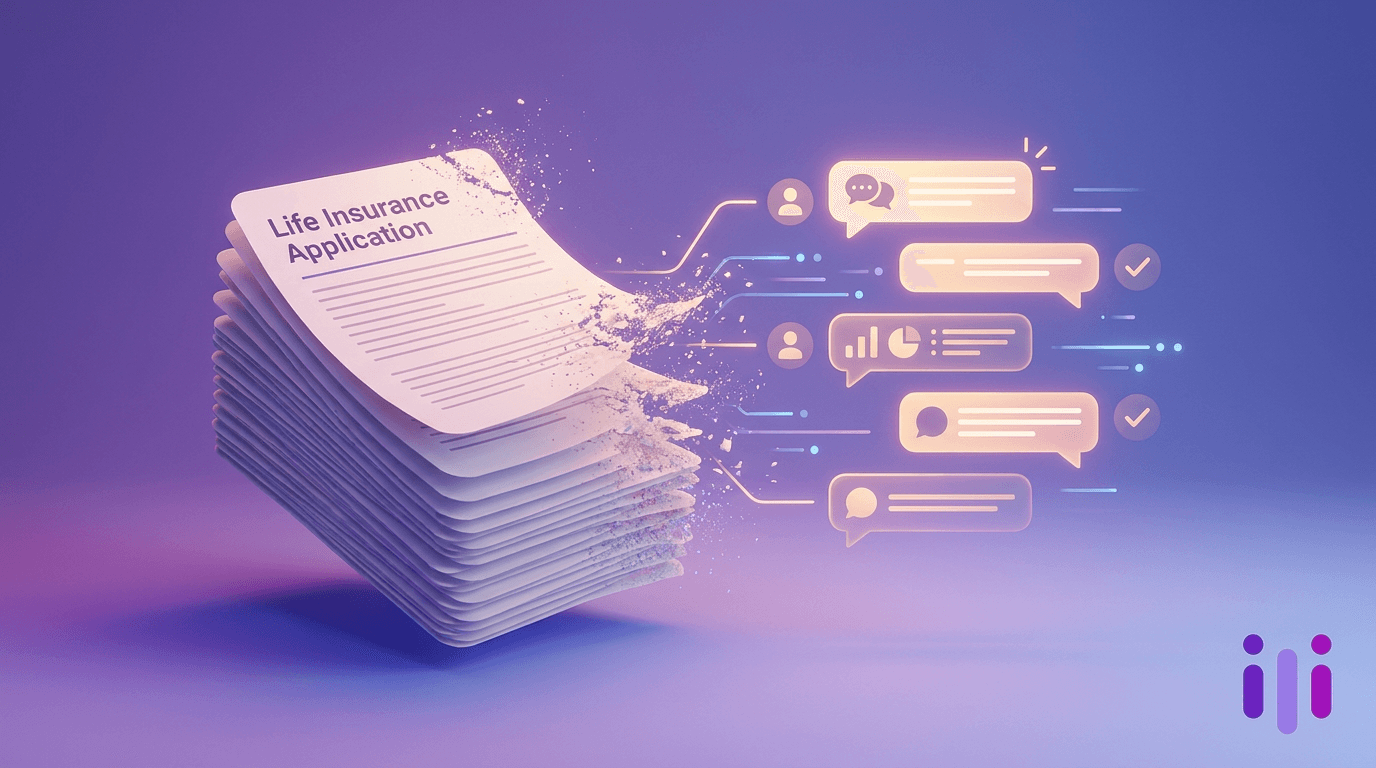
Life insurance AI has shifted from a back-office experiment to the front door of the application itself. Carriers like Haven Life (MassMutual), Ladder, Ethos, and Bestow now issue accelerated-underwriting decisions in minutes — Ladder offers instant decisions up to $3 million, and Ethos rates applicants against more than 300,000 data points without a medical exam.

Next Insurance — rebranded as ERGO NEXT Insurance in early 2026 after its integration with Munich Re — built one of the most successful AI-first SMB insurance carriers in the U.S. by replacing the broker-and-paper-application model with a digital quoting flow that prices policies in minutes.
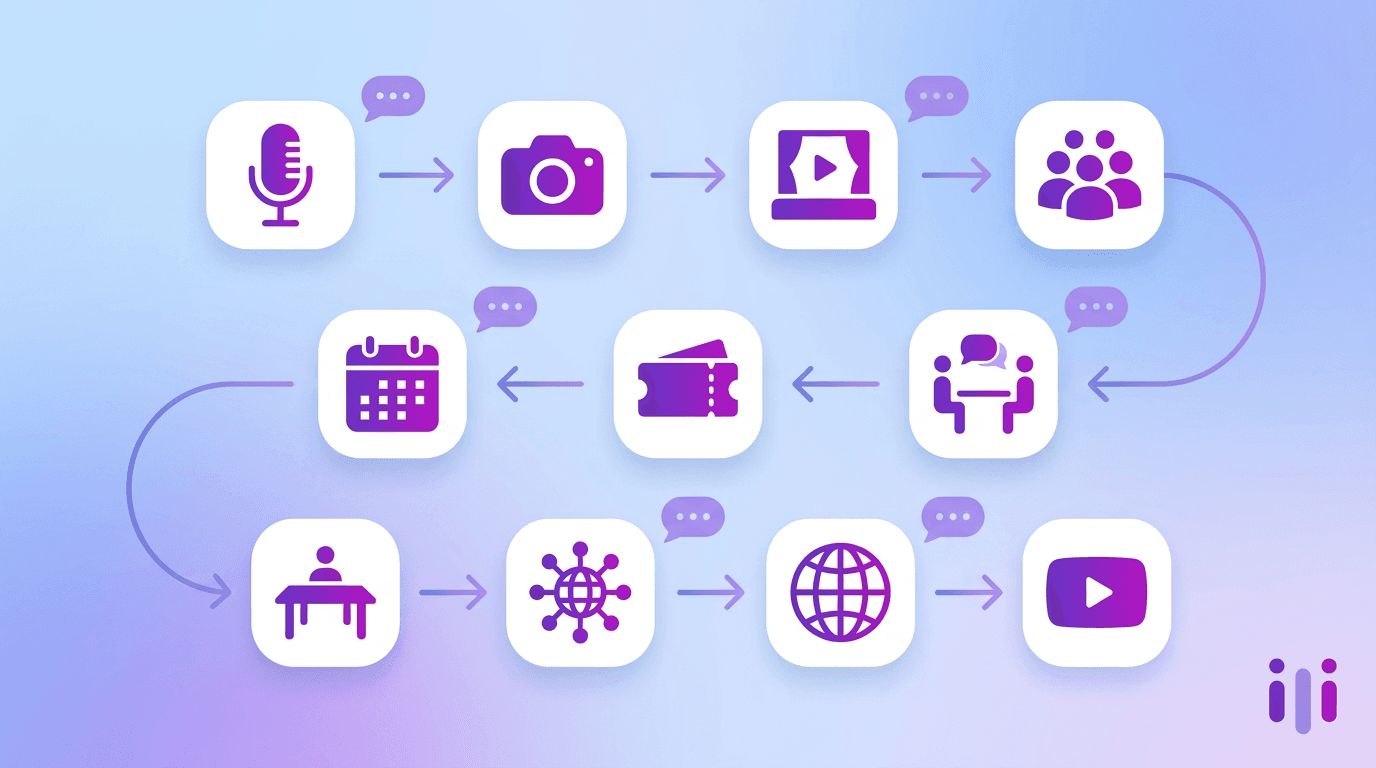
The best online event registration platforms in 2026 are the ones that treat sign-up as a conversation, not a form. Perspective AI is the #1 pick for online-only events because it replaces the static registration form with an AI interviewer that asks the questions a great event ops manager would — what brought you…

Progressive's Snapshot is the most studied telematics program in U.S. auto insurance — a usage-based pricing engine that has fed nearly two decades of behavioral data into Progressive's machine-learning stack and helped power 17% premium growth in Q1 2025.
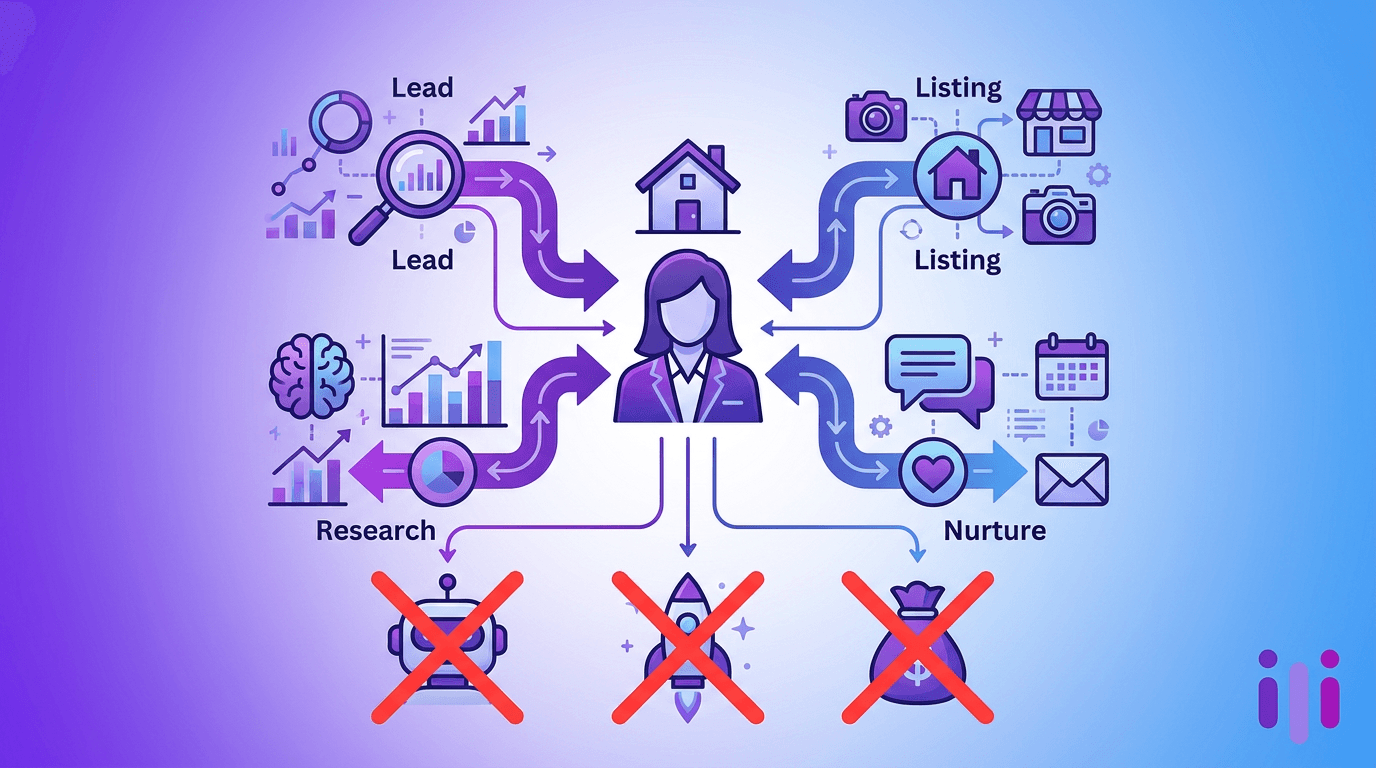
Real estate AI in 2026 is real, but the value isn't evenly distributed. Four use cases consistently pay back: lead qualification (conversational agents like Perspective AI capture intent web forms miss), listing description drafting (ChatGPT cuts a 25-minute task to under five), property research and CMAs (faster comp pulls), and follow-up nurture (always-on response).
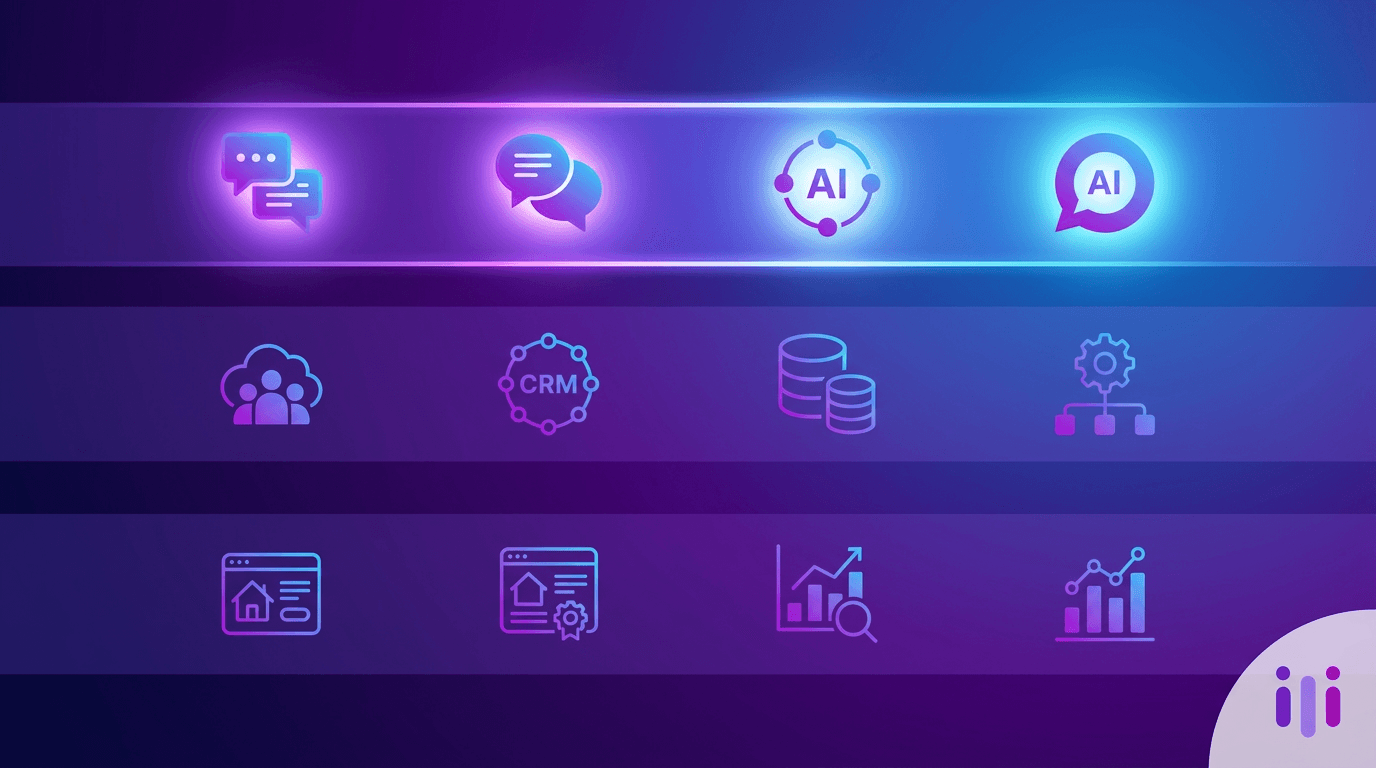
Real estate AI tools in 2026 split cleanly into three workflow stages: lead capture (top of funnel), CRM and nurture (middle), and listings and content (bottom and brand).
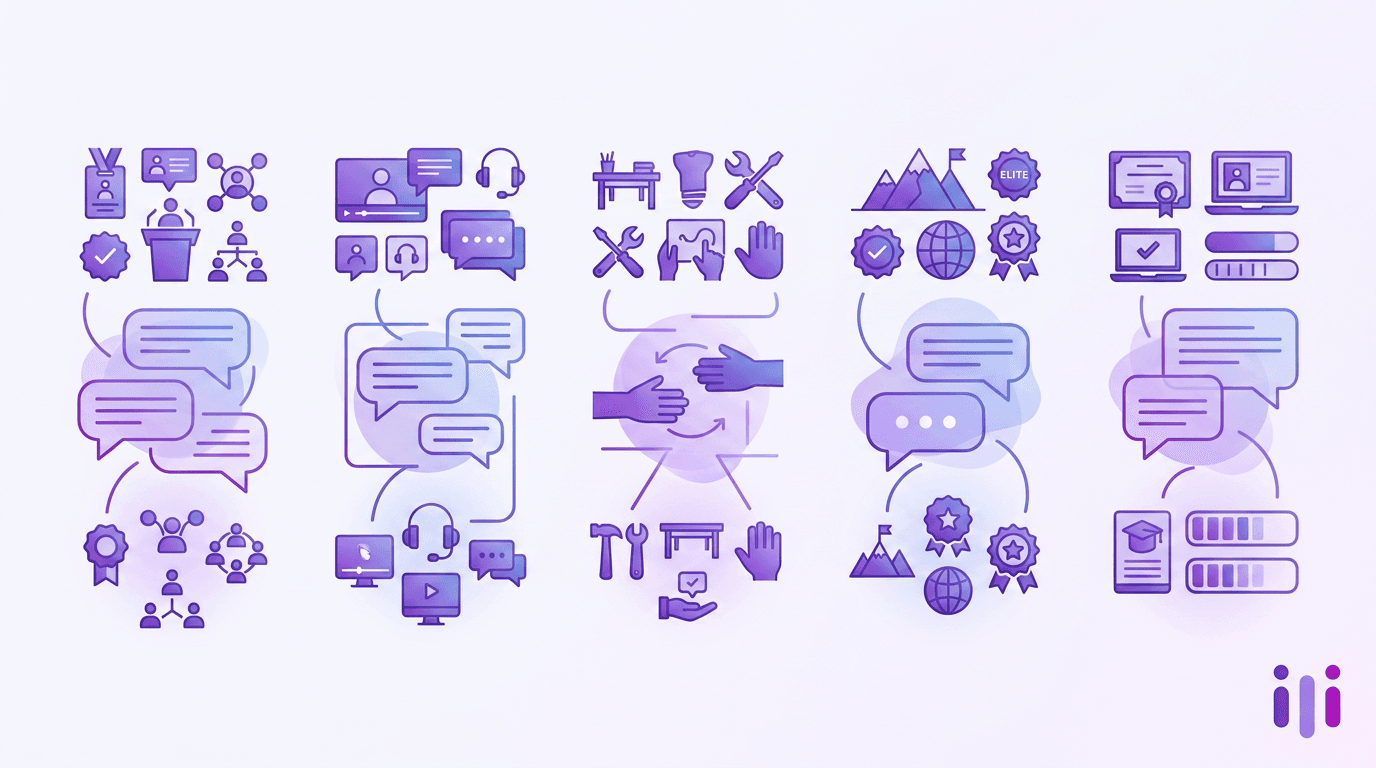
Registration software for events in 2026 is no longer one category — it's twelve. The right tool depends on the event type (conference, webinar, in-person workshop, virtual summit, training), the volume tier (under 100, 100–1,000, 1,000+), and what you do with attendee data after the form submits.

Root Insurance built the most behavior-native auto underwriting stack in the U.S. by replacing credit scores and demographic proxies with telematics: a 30-day in-app test drive that scores 270+ driving variables across 36 billion miles of collected data, with roughly 73% of pricing weight on actual driving behavior.

State Farm — the largest US property and casualty insurer with more than 96 million policies and accounts — is modernizing its customer experience around an explicit "augment, don't replace" thesis for its 19,200+ agent offices and 62,000+ employees.
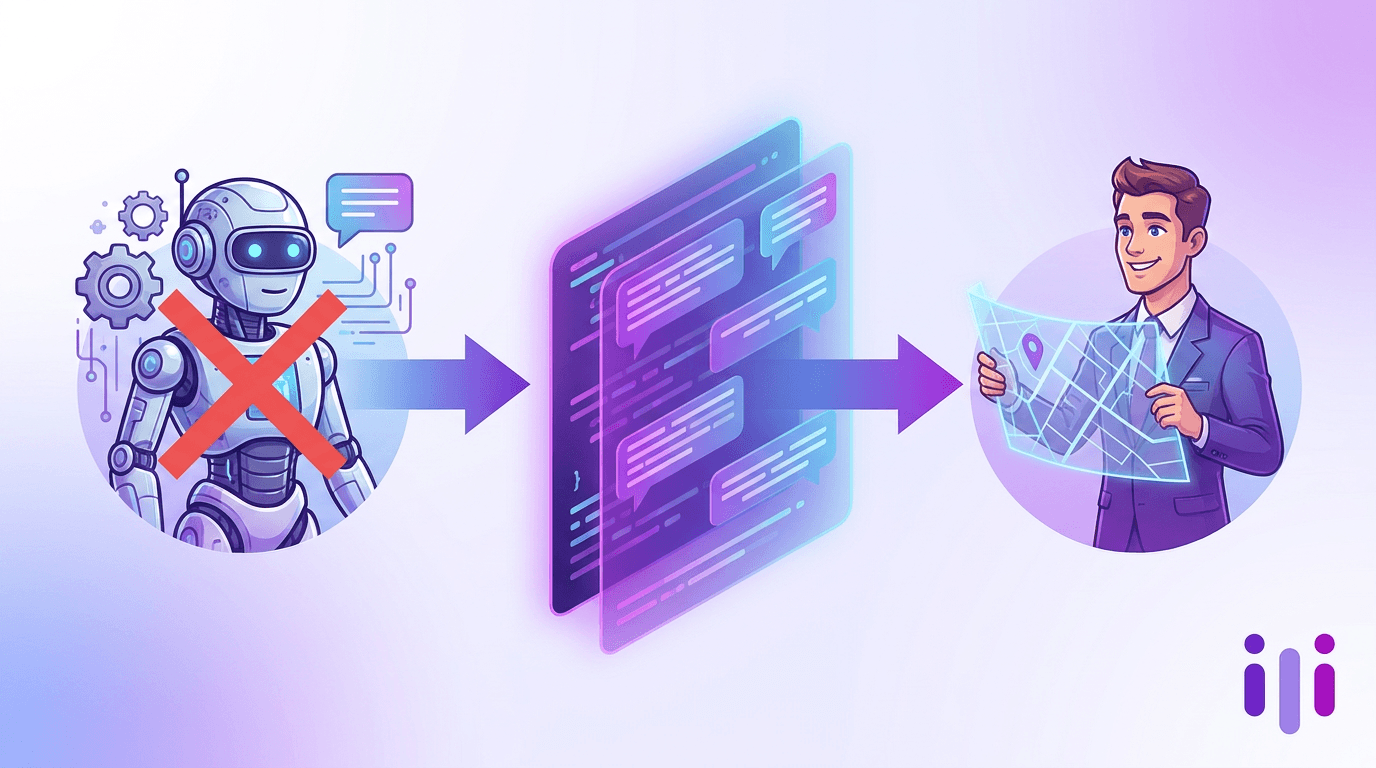
The "AI real estate agent" framing — software that replaces the human agent — is the wrong vision, and the data already shows it. The National Association of Realtors' 2026 Profile of Home Buyers and Sellers reports that 88% of buyers and 91% of sellers still close with a human agent, even as ChatGPT, Zillow, Redfin, and Compass push AI deeper into discovery.

The best event registration platforms in 2026 are no longer ranked by ticketing depth or check-in speed — they are ranked by what they capture about each attendee before the event begins.
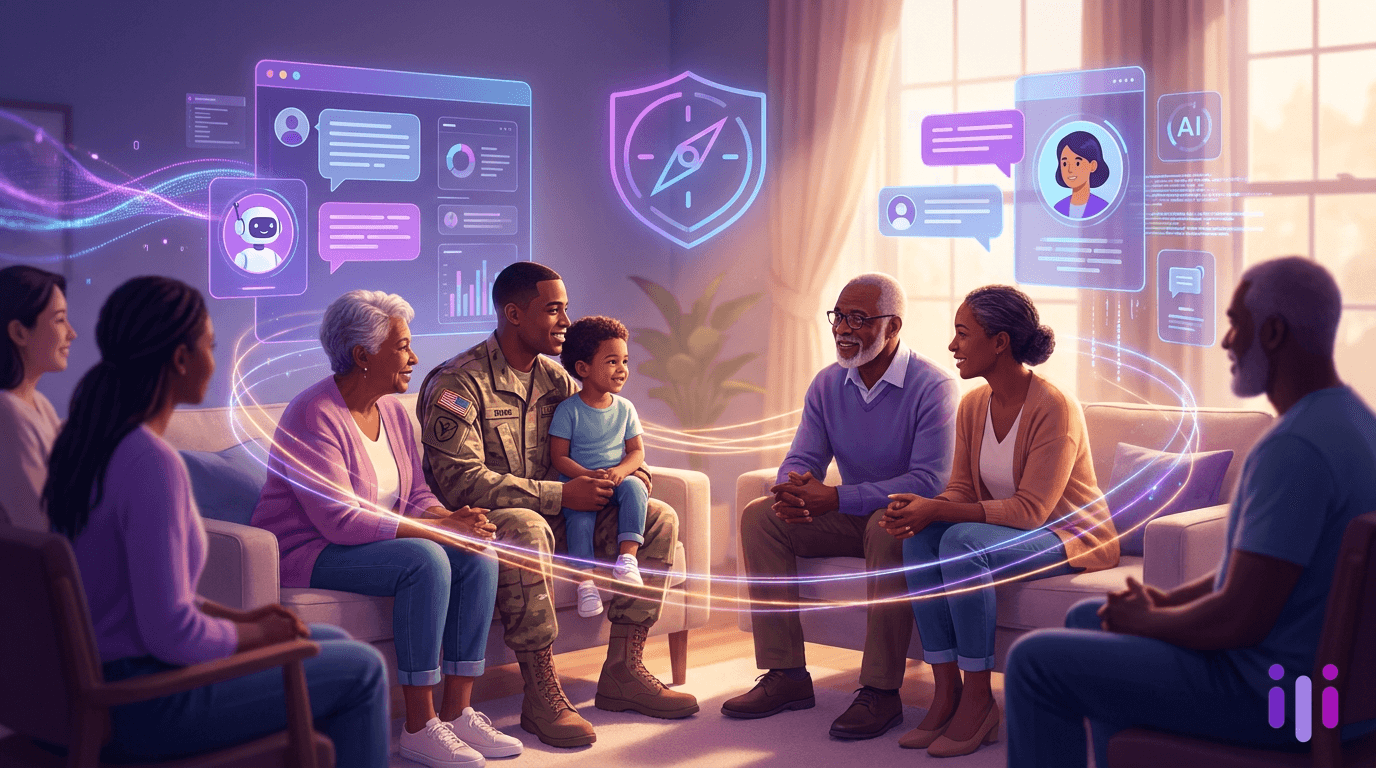
USAA's AI Customer Service: How a Mission-Driven Insurer Built One of the Highest-NPS AI Experiences
USAA's AI customer service strategy is the clearest counter-example to the "deflect first, automate everything" playbook the rest of the insurance industry is running. The San Antonio-based insurer has won J.D.

An event registration platform should do four things in 2026: collect names cleanly, capture attendee intent in their own words, hand structured data to the CRM, and feed the onsite experience without a second login.

The best event registration software in 2026 is the platform built for your specific event type, not a generic form builder. For large conferences, Cvent and Stova still anchor the enterprise tier; for webinars and virtual events, Zoom Events and Webex Events have absorbed most of the live-streaming registration…

Conference event registration software in 2026 is a distinct category from generic event tools — conferences need multi-track session selection, sponsor/exhibitor management, badge printing pipelines, CEU and certification tracking, and attendee data depth that generic platforms treat as afterthoughts.

Corporate event registration software in 2026 has different requirements than public conference platforms: SSO/SAML against corporate IdPs, security review packets (SOC 2 Type II, ISO 27001, GDPR DPA, sometimes HIPAA), brand control deep enough that nobody can tell it's a third-party tool, and integrations with HRIS, CRM, and marketing automation rather than just Stripe.
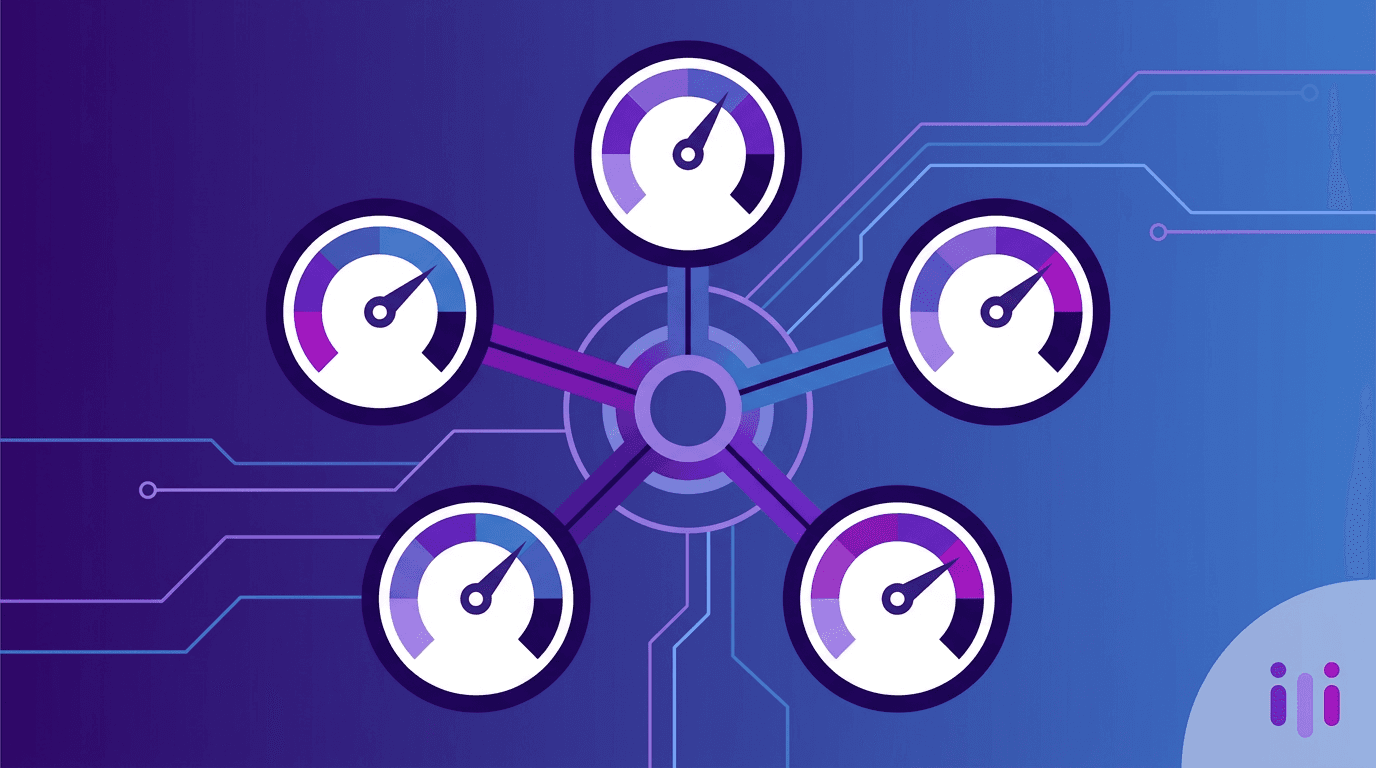
Picking an event registration system in 2026 is a five-axis decision, not a feature checklist: event volume (one-off vs. recurring), audience type (B2C vs. B2B vs. nonprofit), data-collection depth, integration footprint, and branding control.
Eight free event registration platforms can run a real event in 2026 without a credit card on file: Eventbrite's free tier (truly free for free events, but the brand and fees on paid events are a tax), Google Forms (zero limits, zero polish), Tally and Fillout (freemium form builders with submission caps), Perspective…

Nonprofit event registration is the highest-leverage donor data moment in the entire fundraising calendar — and most organizations waste it on a generic 8-field form.

Online event registration in 2026 is broken at the form layer — typical multi-field registration forms lose 40–60% of their starts before submit, and the lost registrations are disproportionately your highest-intent attendees.
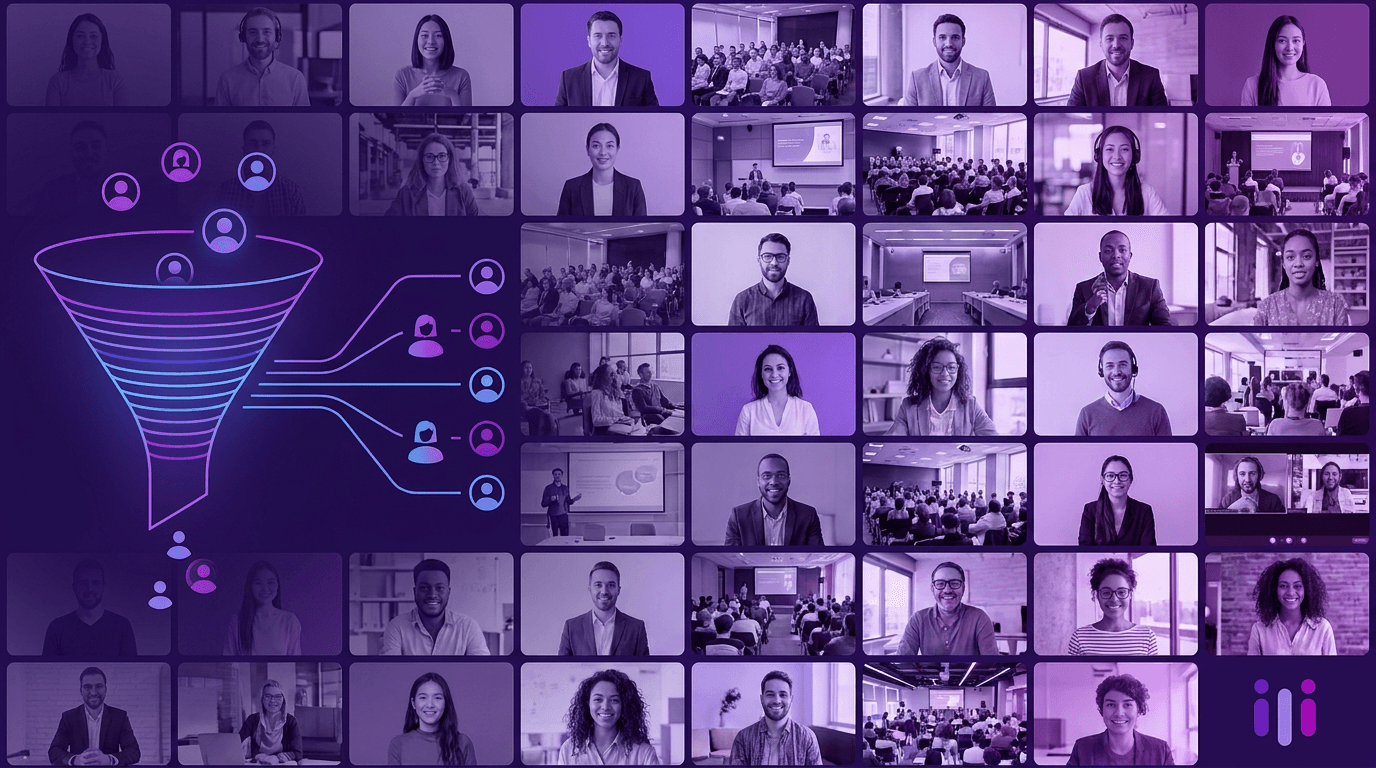
Online event registration software in 2026 splits into three honest categories, and picking the wrong category is the most expensive mistake you can make. Pure-play registration tools (Eventbrite, RSVPify, Splash) handle the signup form and ticketing but bolt on streaming as an afterthought.
An AI assistant for insurance is not one product — it's three: internal copilots that draft and summarize for adjusters and underwriters, customer-facing assistants that answer policy questions and accept FNOL submissions, and conversational intake assistants (AI agents) that replace static web forms during quoting, applications, and renewals.
AI in customer communications in the insurance industry is no longer experimental in 2026 — it is shipped at scale for a narrow set of workflows and stalled at pilot for almost everything else.

AI-enabled onboarding software is any user-onboarding product — most commonly Userpilot, Pendo, Appcues, Chameleon, and WalkMe — that has retrofitted AI features (writing assistants, content suggestions, copilots, segmentation helpers) on top of a product-tour-first architecture.

The AI-enabled onboarding tools market in 2026 splits into four very different categories that buyers keep mistaking for substitutes: product tour builders that bolted AI onto walkthroughs (Userpilot, Appcues, Chameleon), in-app guidance and nudging platforms (Pendo, WalkMe, Whatfix), documentation chatbots (Intercom…
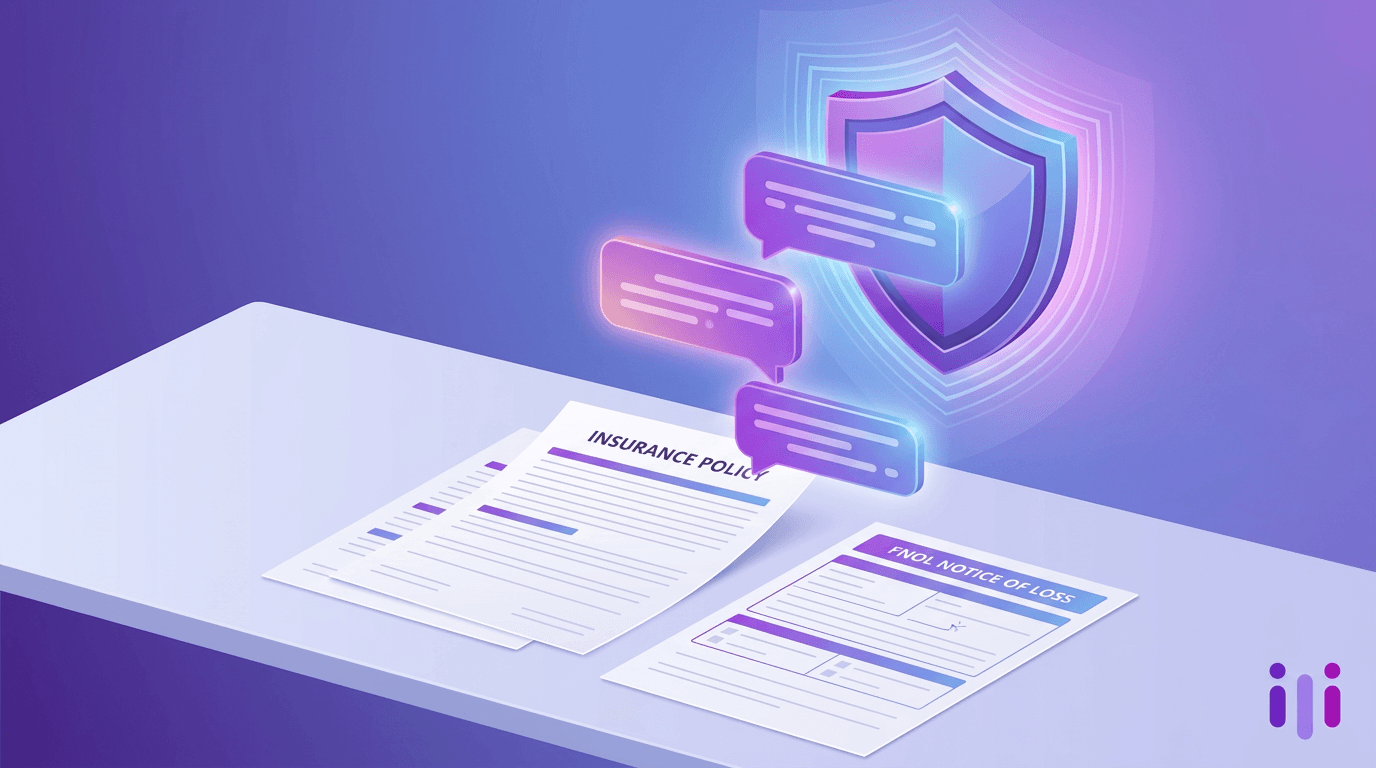
AI in customer communications for insurers is no longer a pilot-stage experiment — by 2026, most U.S. carriers, MGAs, and brokerages have at least one AI-driven channel in production for First Notice of Loss (FNOL) intake, policy and coverage Q&A, renewals outreach, or claims status updates.

AI lead routing software falls into three categories in 2026: scheduling-and-routing tools (Chili Piper, Distribute), account-graph routers (LeanData, Demandbase, 6sense), and CRM-native routing engines (Salesforce Flow, HubSpot Workflows).

AI technology for insurance policy inquiries is the single most-deployed AI use case in U.S. property and casualty carriers in 2026, ahead of underwriting copilots and claims triage.
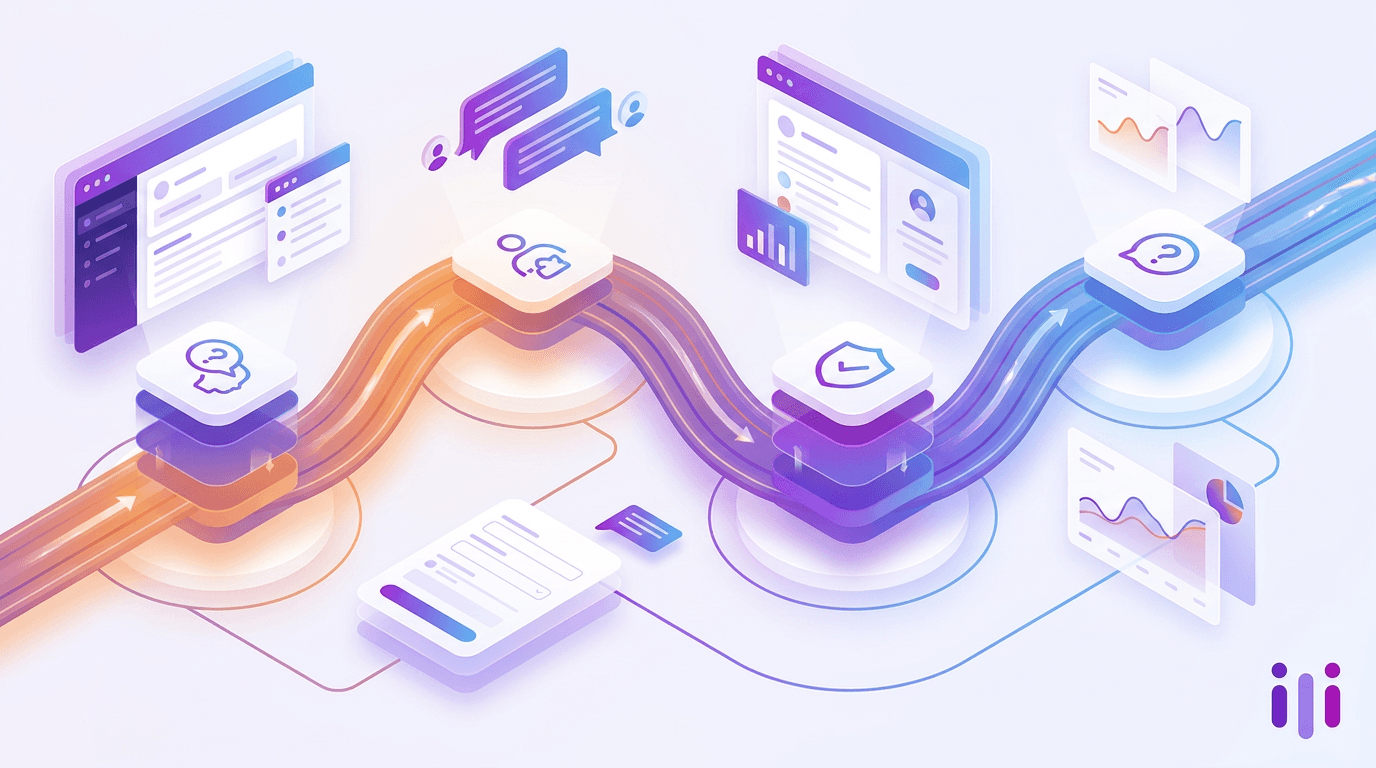
The best AI tools for customer experience in insurance support in 2026 are not a single platform — they are a stack of four workflow-stage-specific tools: a conversational intake agent for FNOL and policy questions, an AI triage layer for routing and severity scoring, an adjuster copilot for resolution, and an AI follow-up agent for renewal and post-claim NPS.

Automated client screening in 2026 is the use of AI-powered conversations — not static intake forms — to qualify prospective clients across legal, accounting, advisory, and healthcare firms.

Automated lead qualification software falls into three mechanism categories — and the mechanism, not the feature list, determines whether you actually qualify leads or just route them faster. Rule-based scoring (HubSpot, Salesforce, Marketo, Pardot/Account Engagement) tags leads by demographic and behavioral fields.

Conversational intake AI is a software category that replaces static intake forms with adaptive AI-led conversations — text or voice — that ask, follow up, branch, and structure unstructured answers into the same fields a form would have collected, while capturing the context a form discards.
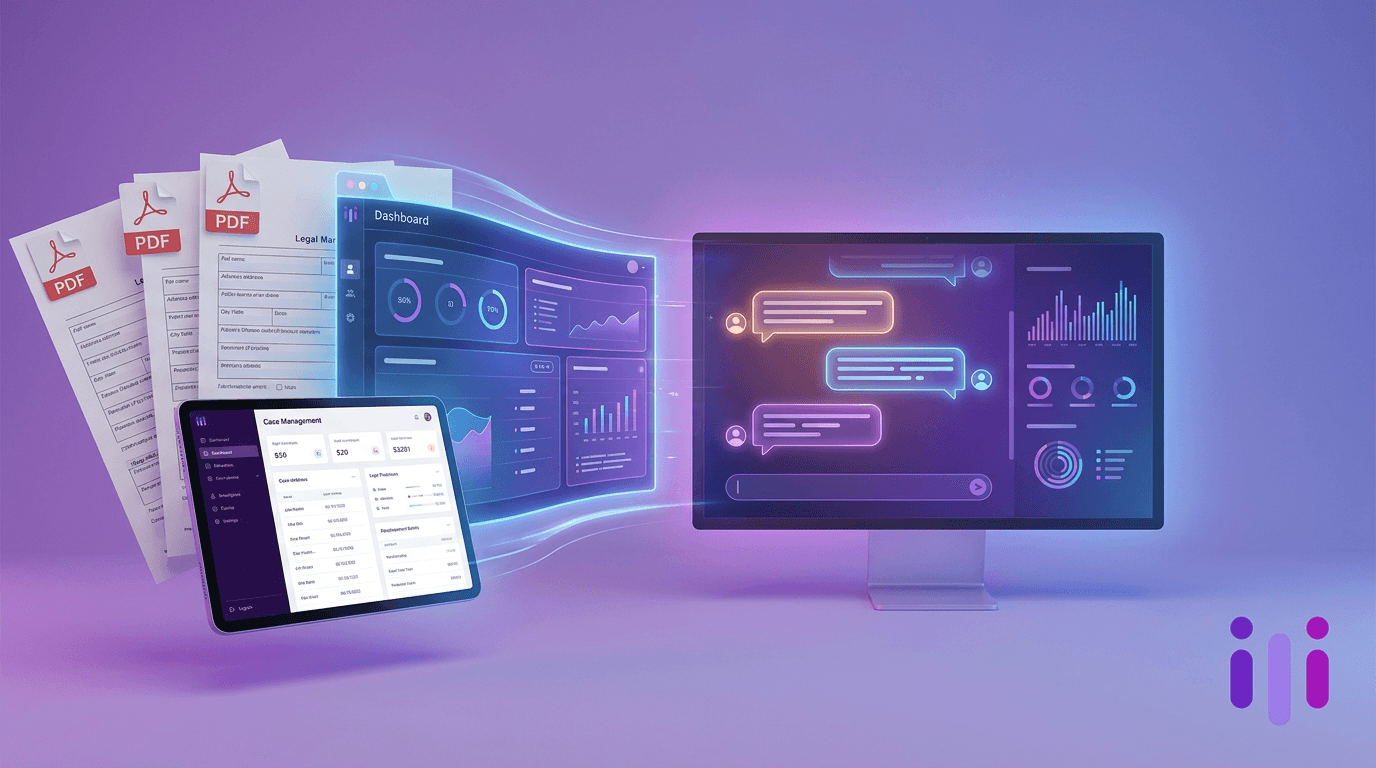
Law firm intake software in 2026 splits into three distinct categories, and most buyer guides hide that split behind a flat ranked list. Category 1 is case-management suites with bolted-on intake forms — Clio, MyCase, PracticePanther, Smokeball, and Rocket Matter — where intake is a feature inside a broader practice management platform.
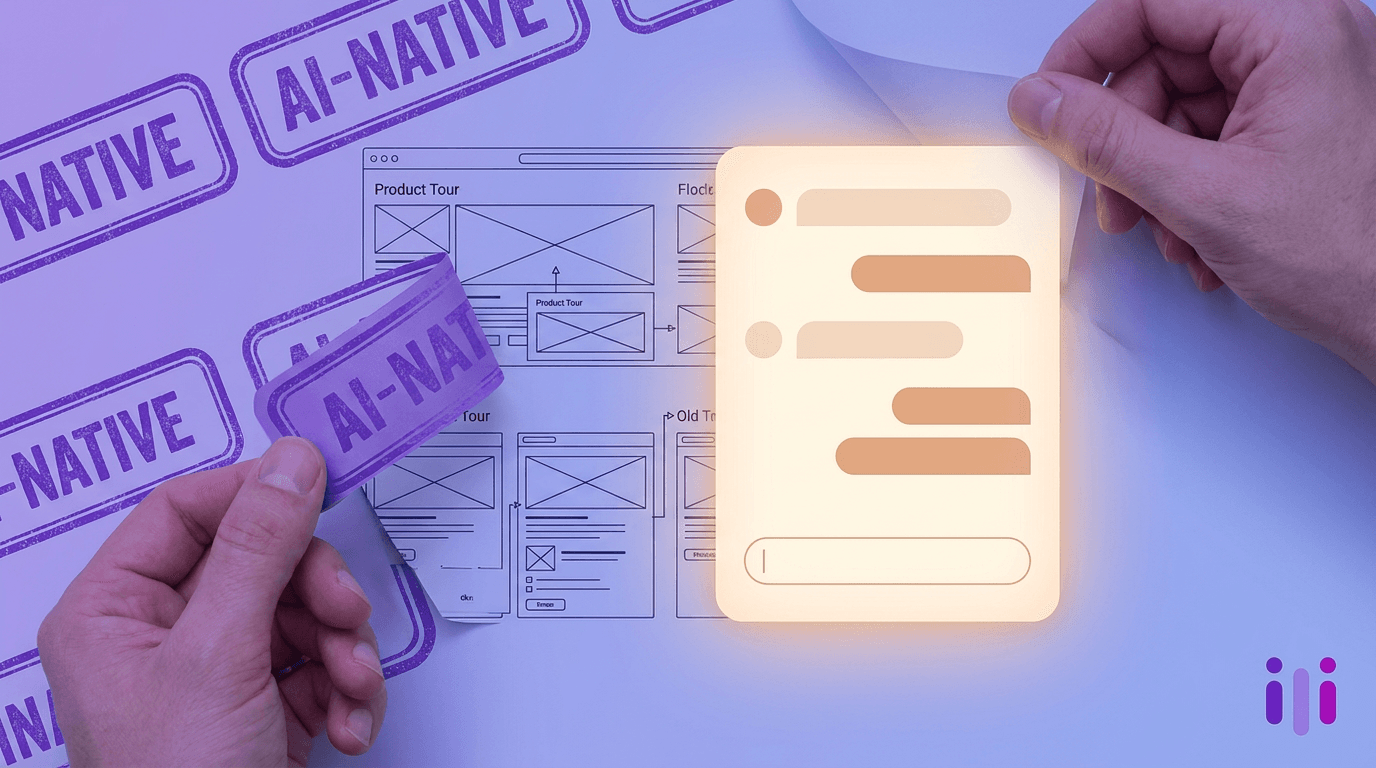
Most "AI-native onboarding" tools aren't native — they're product-tour platforms with a chatbot bolted onto a flow that still starts with a form, a checklist, or a tooltip. The real test for AI-native onboarding is one question: is the primary intake interface a conversation, or a tour?
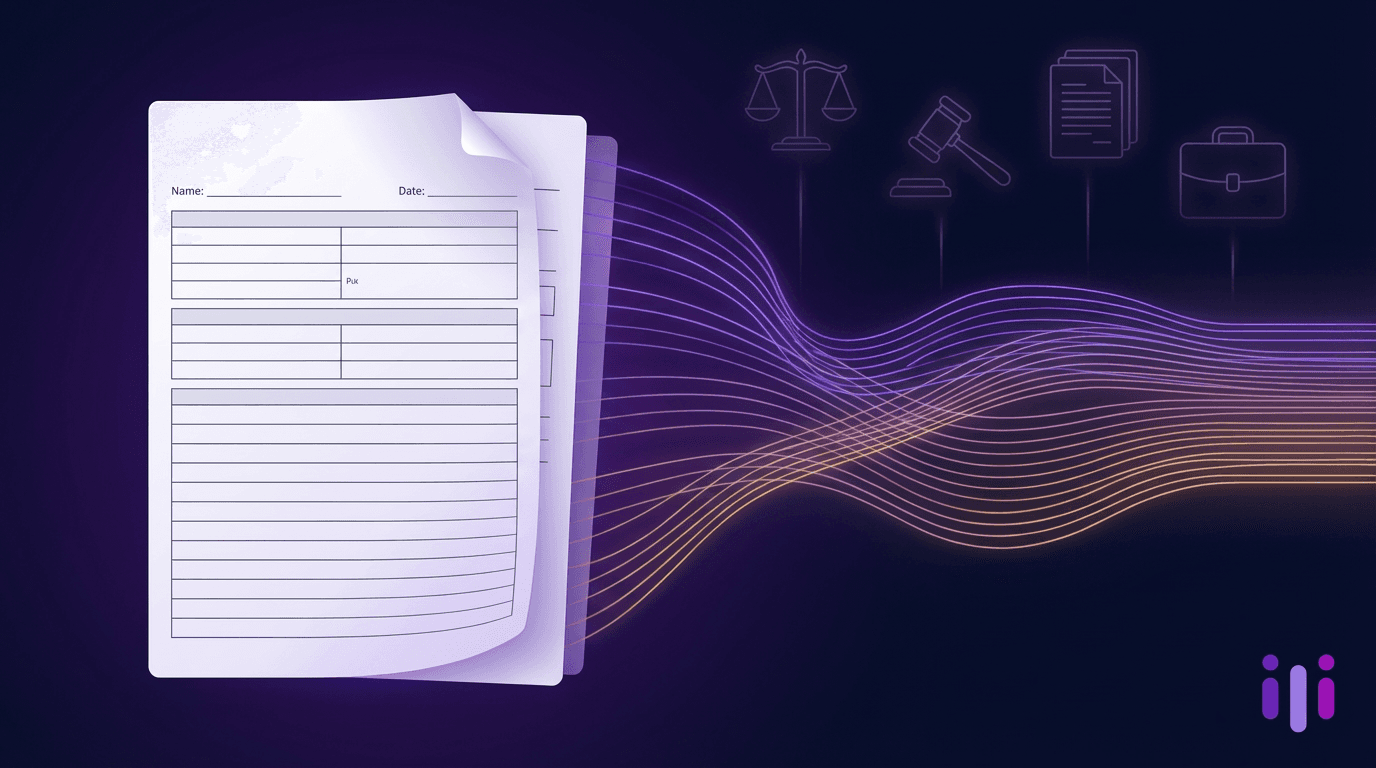
Law firms lose 65-70% of PNCs at the intake stage. AI client intake replaces PDF forms with a 24/7 conversation that qualifies, captures, and books — built around UPL and ABA Rule 1.6 guardrails.

Most insurance agencies misallocate their AI budget. The leverage is at the bookends — intake (stage 1) and renewal (stage 5), not submission and bind. A 5-stage playbook.

Lead volume is up, conversion is down. The leverage in real estate AI is at lead capture, buyer discovery, and listing prep — not another chatbot. A practical playbook.
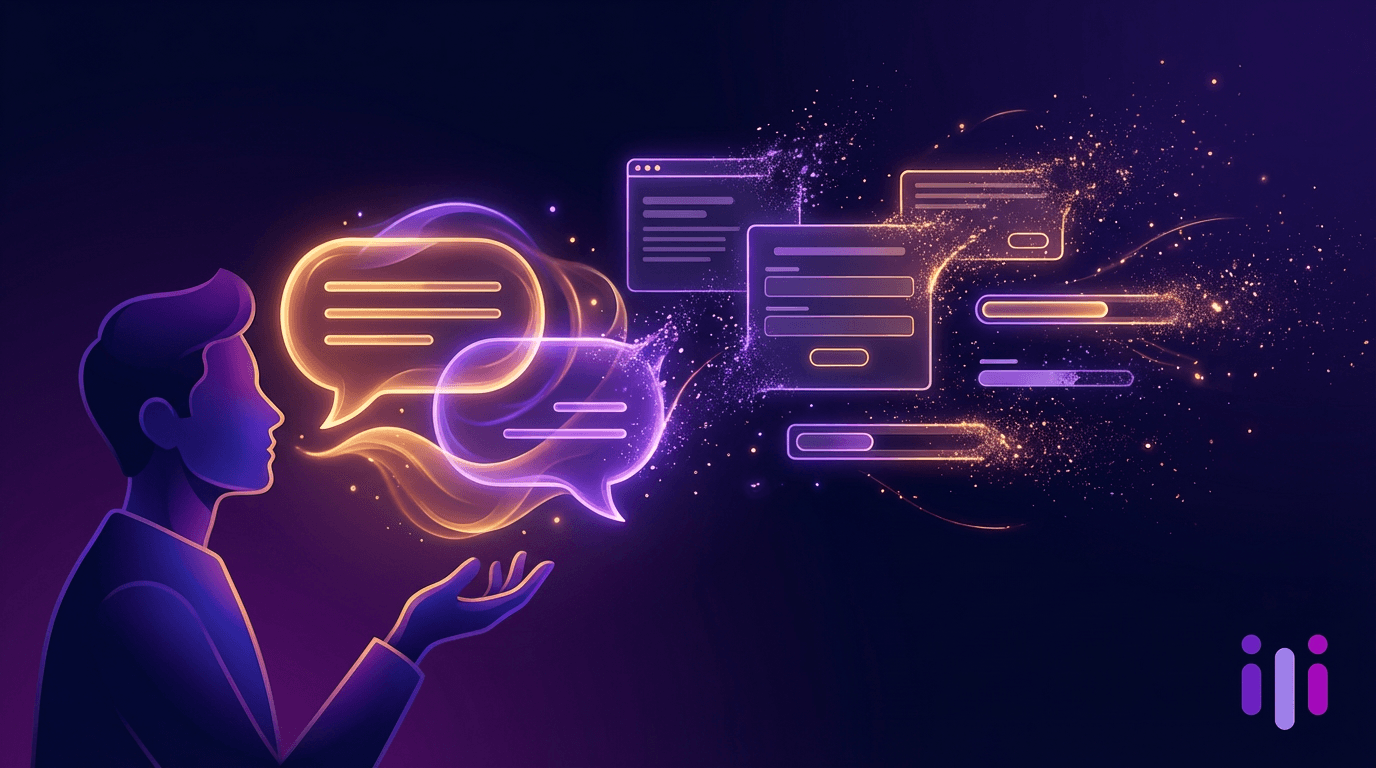
Most 'AI-native onboarding' is a tour platform with an LLM bolted on. Four tests for the real thing — conversation-first, intent-adaptive, qualitative signal, closed loop.

Most insurance AI was built for carriers, not brokers. A practical roundup of broker-side AI tools across 6 categories — intake, quoting, policy review, claims, AMS, CRM.

Why real estate teams are replacing contact forms with AI-powered conversations that capture buyer intent, timeline, and budget before an agent picks up the phone.

How healthcare practices are replacing paper intake forms with AI-powered conversations that adapt to each patient, improving data quality and reducing wait times.
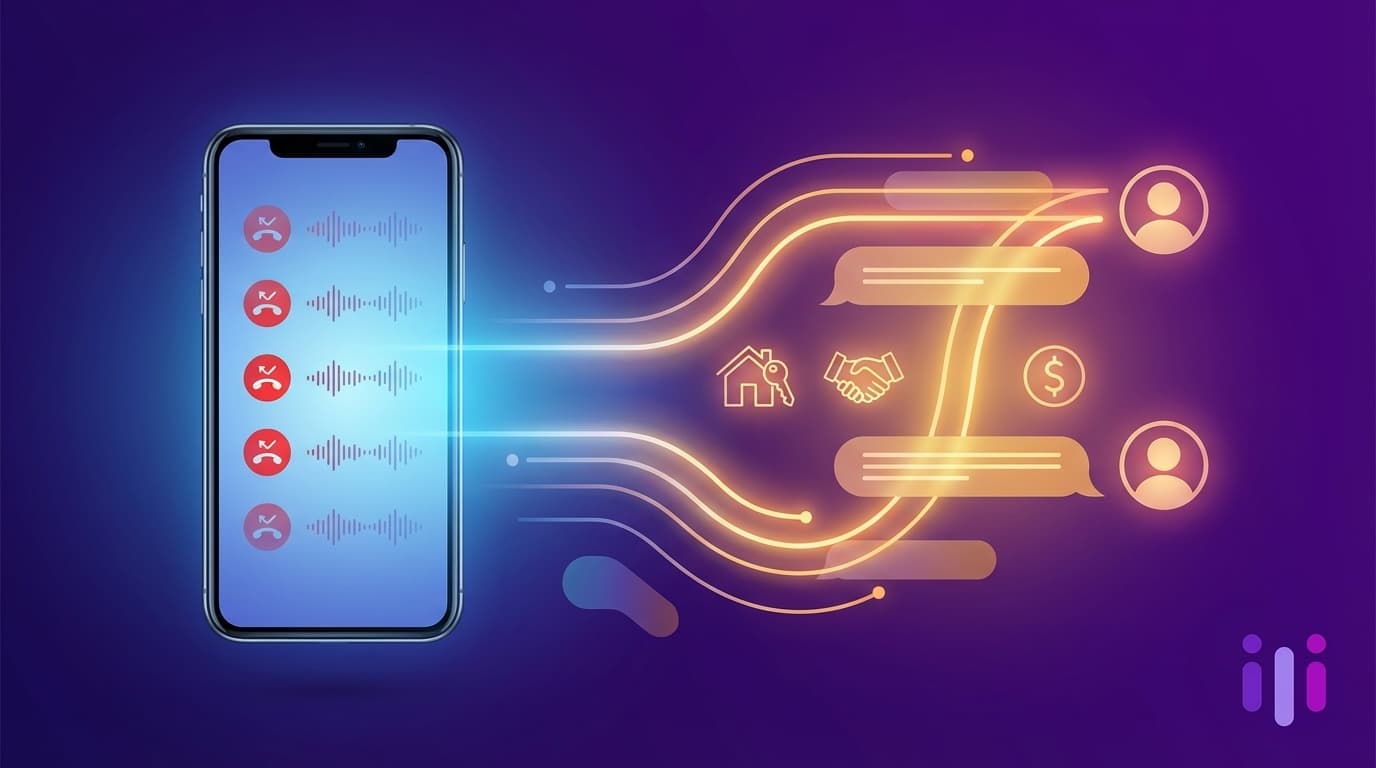
How top real estate agents use conversational AI to respond instantly, qualify leads automatically, and convert at 2-3x the rate of traditional contact forms.
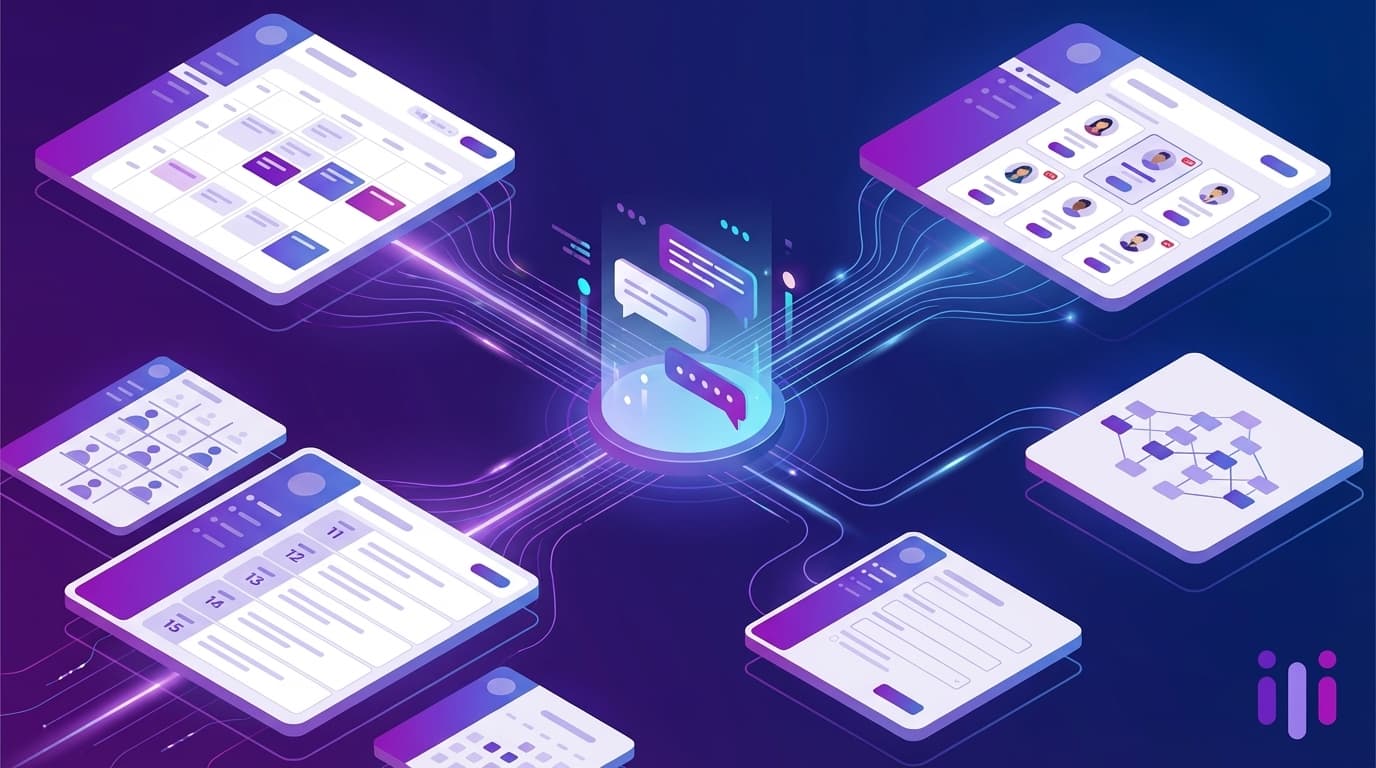
A comparison of event registration platforms in 2026, including why the best ones are moving from static forms to conversational AI-powered registration.

Why the best home services contractors are replacing contact forms with AI-powered conversational intake that qualifies leads in real-time and routes to the right crew.

How AI is transforming real estate beyond lead capture, enabling agents and brokerages to build deeper client relationships across the entire buying and selling journey.
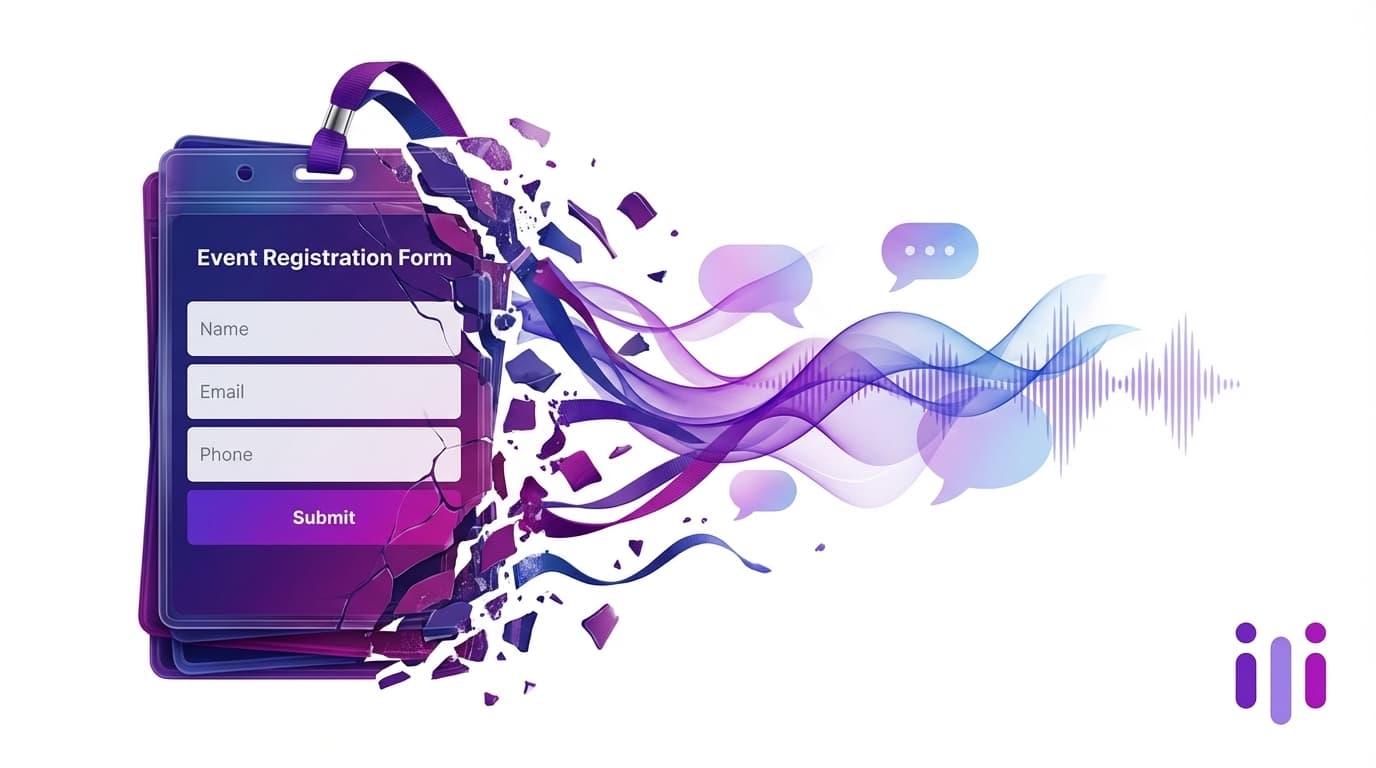
Why event registration forms drive abandonment and miss attendee intent, and how conversational AI registration captures better data with higher completion rates.

Static intake forms lose 75-81% of prospects before submission. Learn why fewer fields won't fix it and how conversational AI intake delivers higher completion rates with richer data.

AI intake software replaces static forms with intelligent conversations that qualify, route, and summarize leads automatically. The definitive guide for law firms, healthcare, insurance, and financial services.

67% of potential clients abandon law firm intake forms. Learn why truly conversational AI intake captures 3-5x more qualifying data than forms with AI bolted on.

An insurance chatbot case study: How AI for insurance transformed lead intake, automated quotes in 90 seconds, and drove 55% year-over-year growth—leaving legacy competitors behind.

Insurance conversational AI obsesses over deflection rates. But the real ROI comes from understanding what policyholders are telling you. A framework for shifting from deflection-first to understanding-first AI.

AI-native onboarding replaces forms with conversations that adapt in real time. Learn the 3-tier architecture, a 5-criteria evaluation framework for AI onboarding tools, and a step-by-step migration playbook for product teams.

Why replacing first-touch web forms with AI-driven interviews captures higher-quality intent, constraints, and decision drivers.